REVIEW · DA NANG
5 Dishes Cooking Class with Market Trip in Da Nang
Book on Viator →Operated by DaNang Apron Up Cooking Class · Bookable on Viator
A market first. Then you cook. The 5 Dishes Cooking Class with Market Trip in Da Nang turns food hunting into a hands-on lesson, starting at Chợ Bắc Mỹ An and ending with five recipes you can actually repeat at home. I especially like the market shopping focus, because it explains what ingredients are doing in the food, not just how to assemble them. One thing to consider: you’re with a group (up to 30), so pace and attention can vary a bit depending on the class flow and timing.
What makes this one practical is the clear recipe set. You’ll learn to make Bánh Xèo, Bún Bò Huế, fresh rolls (spelled Hoian Fresh roll here), young jackfruit salad, and avocado ice-cream—then sit down and eat what you cooked with homemade rice vodka. The possible drawback is language support: the class is designed for English speakers, but a small number of past experiences noted that communication can be tougher if the instructor’s English isn’t strong.
In This Review
- Key Highlights Worth Your Time
- Price and Value: $39 for Market + 5 Dishes + Meal
- Where You Start: Meeting at 07 Nguyễn Bá Lân (Bắc Mỹ An)
- Stop 1 at Chợ Bắc Mỹ An: Buying Ingredients Like a Local
- Back to the Class Kitchen: How the 5 Dishes Train Your Skills
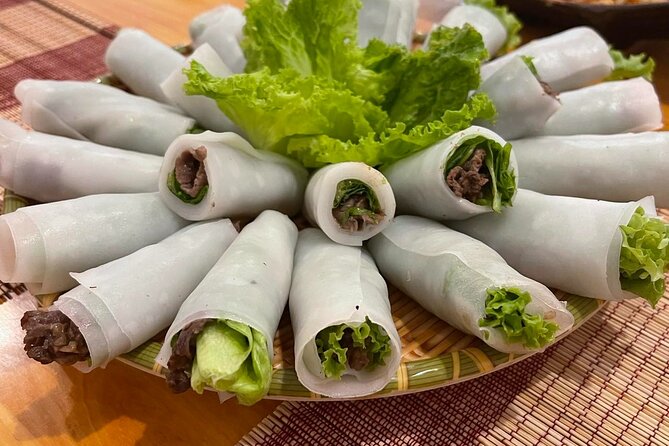
- Bánh Xèo: The Crispy-Savory Skill Starter
- Bún Bò Huế: Building Flavor in a Bowl
- Hoian Fresh roll: Fresh Rolls with a Practical Assembly Approach
- Young Jackfruit Salad: Crunch, Sour, and Heat Control
- Avocado Ice-cream: The Dessert Surprise That Actually Teaches Something
- Eating What You Cook: The Group Meal Moment
- Take-Home Support: Cookbook and Certificate
- What Makes This Class Work for Real Life
- Who Should Book This Cooking Class
- Quick Practical Tips Before You Go
- Should You Book It? My Take
- FAQ
- What is the duration of the cooking class?
- How much does it cost?
- Where do I meet for the tour?
- What happens at the start of the class?
- Which dishes will I learn to cook?
- Is a meal included?
- Can the class accommodate vegetarian, vegan, or allergies?
- How big is the group?
- Is the ticket mobile?
- What is the cancellation policy?
Key Highlights Worth Your Time
- Market-first shopping at Chợ Bắc Mỹ An so you learn ingredients, not just dishes
- 5 recipes in about 4 hours, including a dessert (avocado ice-cream)
- Meal together with homemade rice vodka after cooking
- Take-home cookbook and certificate to help you recreate the food later
- Dietary options available (vegetarian/vegan/allergies) if you request in advance
Price and Value: $39 for Market + 5 Dishes + Meal
At $39 per person for about 4 hours, this is priced like a full activity, not a quick demo. You’re paying for a complete arc: market trip, guided cooking, and a shared meal. That matters in Vietnam, where it’s easy to eat your way through a city without learning anything. Here, the lesson is built into the schedule.
What you get for the money is straightforward: you shop nearby at the market at the start, come back to cook five dishes, then eat the results together. You also receive a cookbook and certificate, plus you’ll have some homemade rice vodka with the meal. If you like the idea of leaving with both skills and a souvenir, that’s a solid value package.
Also, the group size cap of 30 travelers helps keep the class from feeling like a food-court chaos situation. It’s not tiny, but it’s also not so big that you can’t follow what’s happening.
You can also read our reviews of more shopping tours in Da Nang
Where You Start: Meeting at 07 Nguyễn Bá Lân (Bắc Mỹ An)
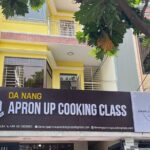
The meeting point is clearly set: 07 Nguyễn Bá Lân, Bắc Mỹ An, Ngũ Hành Sơn, Đà Nẵng. You’ll want to show up about 15 minutes early. That buffer is not just for logistics. The class begins with a market visit, so arriving late can make you miss the first part of the instruction—especially the ingredient talk and how replacements work.
This location is listed as being near public transportation, which is helpful if you’re not planning to hire a car just for one activity. In practice, that means you can plug this into a day that already includes beaches, bridges, or a city walk without turning it into a transportation headache.
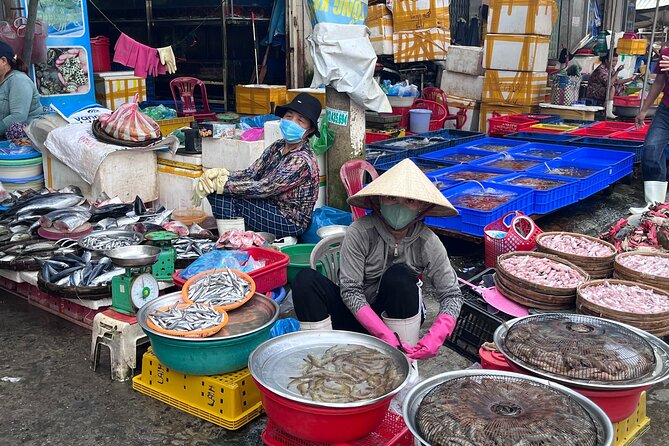
Stop 1 at Chợ Bắc Mỹ An: Buying Ingredients Like a Local
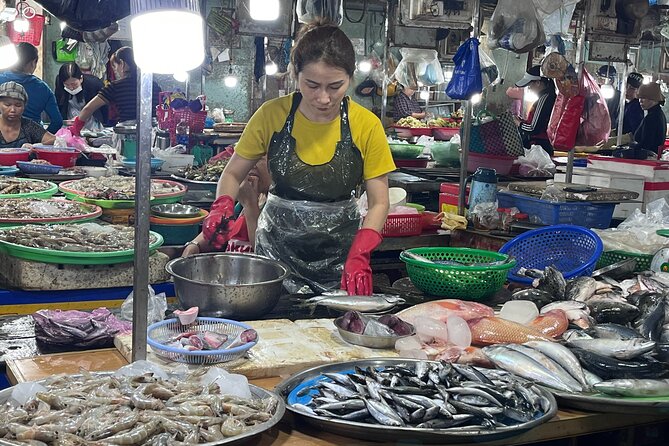
The day kicks off with a market visit at Chợ Bắc Mỹ An. This part is more valuable than it sounds, because the instructor isn’t only showing where things are. The lesson is about understanding ingredients and how you might substitute them back home.
Think of it like this: when you cook Vietnamese food later, the hardest part is usually not the technique. It’s finding the right components—greens, aromatics, starches, sauces, and textures. A market-first class gives you a mental map of what to look for when you’re standing in your own grocery store later.
You’ll also get a chance to ask questions while you’re surrounded by the real items. That’s when ingredient knowledge clicks, because you can connect what you see to what you’ll eventually cook. Even if you only catch part of the conversation, the buying process helps you identify the building blocks for each dish.
One consideration: market timing can feel a little sensitive. If you want a calm start to the day, build in a little patience. Markets move at their own speed.
Back to the Class Kitchen: How the 5 Dishes Train Your Skills
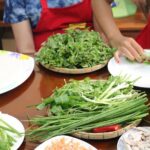
After the market stop, you return to cook. The plan is built around five distinct flavors and techniques, so you don’t just learn one style of Vietnamese cooking. You get a mix of savory pancakes, noodle soup, fresh rolls, salad crunch, and a cool dessert.
Here’s what each dish represents for your cooking skills, and why it’s a good set.
Bánh Xèo: The Crispy-Savory Skill Starter
Bánh Xèo is often described as a Vietnamese savory pancake, and it’s a great dish to learn early because it teaches you how batter thickness and pan heat affect the result. In a structured class, you’ll be learning the process steps directly: preparing components, mixing or arranging the fillings, and managing cook time so the outside doesn’t go from crispy to sad.
This dish is also useful for home cooks because it’s flexible. Even if you don’t match every ingredient exactly, the pancake method stays the same. That’s exactly the kind of lesson a market-based start helps reinforce.
You can also read our reviews of more tours and experiences in Da Nang


Bún Bò Huế: Building Flavor in a Bowl
Bún Bò Huế is a noodle soup known for its deep flavor profile. Learning it in class is about more than assembling noodles. You’re practicing how sauces and aromatics work together to create that signature taste without relying on fancy equipment.
If you’re the type of traveler who likes to recreate meals with sauces and herbs later, this one is worth it. It gives you a template for balancing richness, acidity, and spice.
Hoian Fresh roll: Fresh Rolls with a Practical Assembly Approach
The class includes Hoian Fresh roll (written this way), which points to a roll style associated with central Vietnam. Fresh rolls are a smart teachable format because they train you on texture balance: crisp components, tender herbs, and a wrapper that shouldn’t turn into a paste.
This is also one of the easier dishes to adapt at home. You can swap fillings if you understand the role each part plays—freshness, crunch, and sauce pairing.
Young Jackfruit Salad: Crunch, Sour, and Heat Control
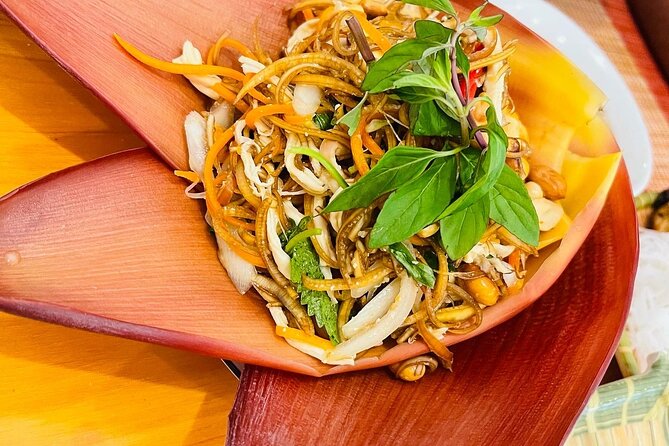
Young jackfruit salad brings a different set of skills: shredding or handling young fruit and balancing sour, salty, and spicy notes. Salad is where many people mess up at home, usually by getting the seasoning wrong or not achieving the right texture.
Learning it through a guided class helps you understand how to taste and adjust as you go. The goal is that crispness plus punch—without the dressing tasting overly harsh.
Avocado Ice-cream: The Dessert Surprise That Actually Teaches Something
Ending with avocado ice-cream is a smart move. It forces the class to cover texture and sweetness, and it gives you a cool finish after warm savory food. Plus, it’s a reminder that Vietnamese cooking isn’t only savory street food.
If you’ve ever made dessert that turned icy or too soft, a class like this can help you understand what consistency should feel like. Even if your ingredients are different later, having the baseline technique is what matters.
Eating What You Cook: The Group Meal Moment
Once you’re done, you’ll eat together. This is one of the best parts of any cooking class, and this one is built that way: you’ll enjoy the dishes you made, and you’ll have some homemade rice vodka included with the meal.
The vodka isn’t something you need to treat like a party prop. It’s part of the cultural flavor experience. If you don’t drink, you can usually take a pass without ruining the point of the meal—just focus on the food you made and compare your results to what you were aiming for.
Sitting together also helps you learn faster. You’ll see how others plated and served, and you can notice differences that improve your next attempt.
Take-Home Support: Cookbook and Certificate
You’ll receive a cookbook and a certificate at the end. That’s not just ceremonial. A cookbook helps you translate what you did in class into a repeatable process at home. A certificate is a nice bonus if you like tangible proof that you did a real activity and didn’t just “eat and hope.”
Practical tip: when you get the cookbook, skim it once before you get distracted by sightseeing. Then use it the next time you’re grocery shopping, while the market lesson is still fresh in your head.
What Makes This Class Work for Real Life
This experience is built around a simple idea: if you understand ingredients, you can cook the food later. The market trip is the foundation. The cooking session is the reinforcement. The meal is the check-in.
That flow is exactly what makes the class more than a one-time food show. Even if you’re a confident cook, you benefit from the structured guidance. If you’re a total beginner, you benefit more—you’ll get steps you can follow without guessing.
It also helps that you’re cooking a mix of dishes, so you learn multiple techniques in one trip. You’ll come away with a small toolkit: pancake-style cooking, soup-flavor thinking, wrapper-and-fill assembly, salad balancing, and a dessert finish.
Who Should Book This Cooking Class
I think this tour is a strong fit if you:
- Want a Da Nang cooking class that teaches recipes you can repeat
- Like market experiences where you learn ingredient names and practical replacements
- Prefer an organized activity that still feels local, not staged
- Want a fun group setting without the class being too big (max 30)
It’s also good for couples or solo travelers who want company and conversation while learning. If you’re traveling with friends who eat adventurous foods, this is an easy way to do something active together.
If you hate structured schedules, you might find a market + kitchen plan a bit tight. But if you enjoy doing things in sequence, you’ll probably love it.
Quick Practical Tips Before You Go
A few small things can make this run smoother:
- Show up 15 minutes early so you don’t miss the market shopping and ingredient explanations
- Think about your diet in advance if you have restrictions. Vegetarian/vegan and allergy requests are supported if you mention them during booking
- Wear shoes that can handle market ground. You’ll likely be on your feet for the market and kitchen portions
- If you drink, rice vodka is included with the meal. If you don’t, focus on tasting the food you made
And yes, bring questions. This tour is built around the idea that instructors can answer what you’ve been curious about.
Should You Book It? My Take
Book it if you want a real Da Nang food education that starts at the market and ends with five dishes you can rebuild later. The value is strong for $39 because you’re getting the ingredient lesson, the cooking instruction, the shared meal, and take-home materials.
Skip it or think twice if you’re only looking for a casual snack stop. This is an activity with cooking steps and a set schedule, not just a stroll. Also, if you’re very sensitive to language barriers, it’s worth noting that a few past experiences flagged communication issues. Most likely you’ll be fine, but it’s something to keep in mind.
In short: if you want to leave Da Nang knowing what to buy and how to cook, this is one of the more practical classes you can choose.
FAQ
What is the duration of the cooking class?
The experience lasts about 4 hours.
How much does it cost?
It costs $39 per person.
Where do I meet for the tour?
Meet at 07 Nguyễn Bá Lân, Bắc Mỹ An, Ngũ Hành Sơn, Đà Nẵng 550000, Vietnam.
What happens at the start of the class?
You meet about 15 minutes before starting, then visit the nearby market (Chợ Bắc Mỹ An) to shop and learn about local ingredients.
Which dishes will I learn to cook?
You will learn to cook 5 dishes: Bánh Xèo, Bún Bò Huế, Hoian Fresh roll, young jackfruit salad, and avocado ice-cream.
Is a meal included?
Yes. You eat together at the end of the class, and homemade rice vodka is included with the meal.
Can the class accommodate vegetarian, vegan, or allergies?
Yes. Vegetarian, vegan, and allergy requests can be catered for if you mention them when booking.
How big is the group?
The maximum group size is 30 travelers.
Is the ticket mobile?
Yes, the tour provides a mobile ticket.
What is the cancellation policy?
Free cancellation is offered. You can cancel up to 24 hours in advance for a full refund. If you cancel less than 24 hours before, the amount paid is not refunded. If the minimum number of travelers isn’t met, you’ll be offered another date or a full refund.