REVIEW · DA NANG
DaNang Farm-to-Table Cooking Class with Market and Coffee Tasting
Book on Viator →Operated by Jolie Danang Cooking Class · Bookable on Viator
Your lunch starts with a walk.
This Da Nang class is interesting because it links farm-to-table shopping with a real cooking lesson you can repeat at home. I like that you begin at a vegetable village, then move into a market where you learn what ingredients actually matter, and I also like that the guide can switch between English and French. A team like Hana and Blue keeps it fun and fast-moving, so you can ask questions instead of just watching.
The main thing to plan around: there’s no hotel pickup, so you’ll need to get to the meeting point on your own and arrive ready to start.
In This Review
- Key reasons this cooking class works
- Da Nang farm-to-table lunch: how the day flows
- Vegetable village walk: learning the herb logic
- Vietnamese coffee tasting: what to expect before the market
- Market Han and ingredient hunting: buy like you cook
- Small-group cooking at a local home: where you actually learn
- What you can cook, and how the flavors make sense
- Guides in English and French: the advantage of asking real questions
- Value for $60: what’s included and why the price feels fair
- Getting there at 9 Hàm Tử: making logistics painless
- Should you book this farm-to-table class in Da Nang?
- FAQ
- How much does the Da Nang farm-to-table cooking class cost?
- How long is the experience?
- Is there hotel pickup or drop-off included?
- Where is the meeting point?
- How big is the group?
- What’s included in the price?
- What’s not included?
- Do the guides speak English?
- What is the cancellation policy?
Key reasons this cooking class works
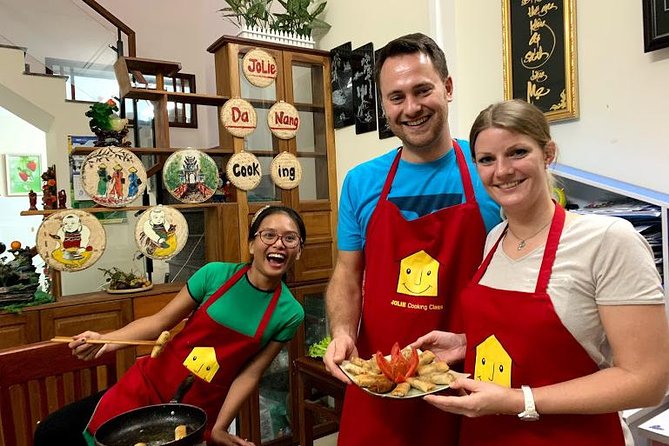
- Farm-to-table begins before the kitchen with a vegetable village walk and herb focus
- Market Han ingredient coaching so you learn what to buy and why
- Vietnamese coffee tasting built into the flow, not tacked on at the end
- Small-group size (max 10) that makes questions and hands-on time easier
- Local-home, family-style meal after you cook, so you eat what you made
Da Nang farm-to-table lunch: how the day flows
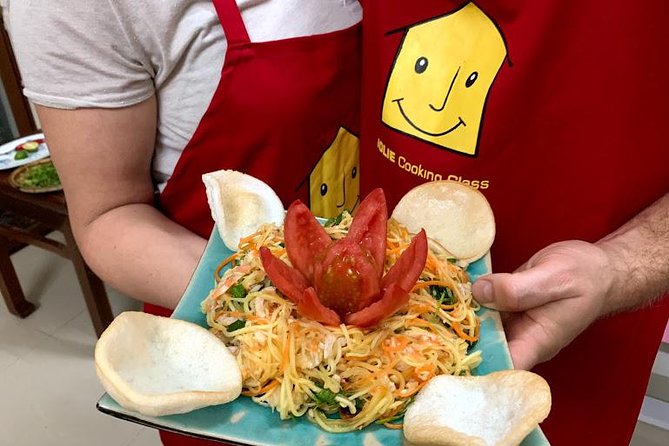
This experience is designed as a chain reaction: see the ingredients first, then shop for them, then cook with confidence. It runs about 4 hours 30 minutes, and for $60 that time includes more than just a recipe lesson. You get the village and market stops, Vietnamese coffee tasting, transportation during the experience, and everything you need to cook and eat your lunch.
For me, the value is in the order. Start with herbs and produce, then learn the basics of selecting ingredients at the market. When you finally step into the kitchen, you’re not guessing. You’ve already seen what freshness looks like and you’ve heard what to ask for.
Also, the group stays small (up to 10 travelers). That matters because cooking classes can turn into a one-way show when groups are bigger. Here, the format is meant to keep you involved.
You can also read our reviews of more food & drink experiences in Da Nang
Vegetable village walk: learning the herb logic
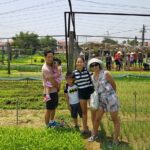
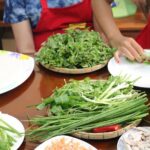
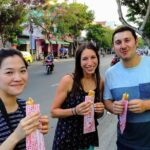
You begin with a short walk to a nearby vegetable village where produce and herbs are grown. Expect to see how fresh leafy greens and herb plants are cultivated and how local farming life works day to day. Even if you don’t know Vietnamese plant names, you can still learn the practical idea behind Vietnamese cooking: herbs are not garnish. They’re flavor and texture.
One of the things I appreciate about this stop is that it teaches you how to think. Instead of memorizing one dish, you start to recognize the herb categories that show up across meals: aromatic leaves, crunchy greens, and fragrant stems. You’ll also have a chance to ask questions as you walk—especially helpful if you’re the type who wonders why one leaf tastes so different from the next.
A possible consideration: because this is an outdoor village walk, wear shoes you can stand in comfortably. Da Nang weather can be warm and you’ll be on your feet before you ever touch a knife.
Vietnamese coffee tasting: what to expect before the market
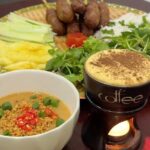
Then the schedule shifts into something very Vietnamese: coffee tasting. You’re not just getting caffeine; you’re getting a quick culture bridge that also fits the rhythm of a food day in Vietnam. It’s a small pause before the market, which helps you stay focused.
The practical benefit is timing. If you’ve ever tried a market tour on an empty stomach, you know it gets chaotic fast. Coffee tasting breaks the day into manageable segments so you can pay attention when you reach the ingredients.
If you’re sensitive to caffeine, pace yourself. There’s tasting included, but it’s not described as a full coffee service, so you can take it slow.
Market Han and ingredient hunting: buy like you cook
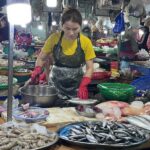
The market portion is where the class stops being touristy and starts being useful. You’ll visit a local market to discover essential ingredients used in everyday cooking, and this is where your guide’s English and French skills shine. The goal isn’t to turn you into a market expert overnight. It’s to help you go home knowing what to look for when you recreate the dish.
In particular, the market stop is tied to real choices: fresh herbs, sauces, and vegetables that affect flavor and texture. The guide can explain what makes certain items better for cooking—like freshness, aroma, and how ingredients behave once cut and cooked. That kind of advice is hard to get from a restaurant meal.
One detail I like: you’re learning while you walk. That means you can ask questions on the spot and connect the ingredient to the later cooking steps. If you’ve ever felt lost in Vietnamese ingredient shops after your trip, this stop helps solve that problem.
Small-group cooking at a local home: where you actually learn
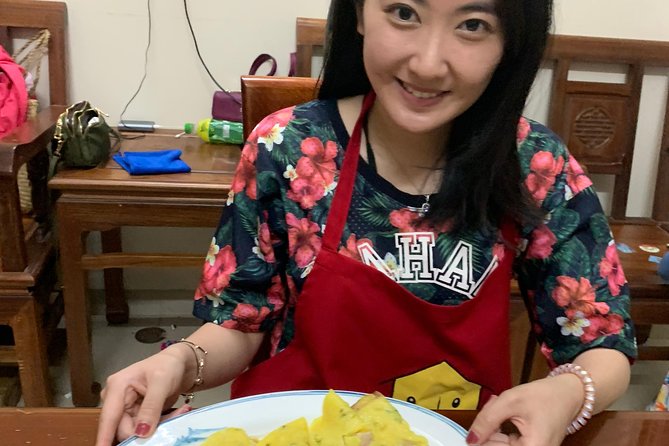
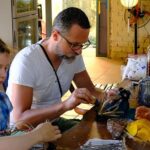
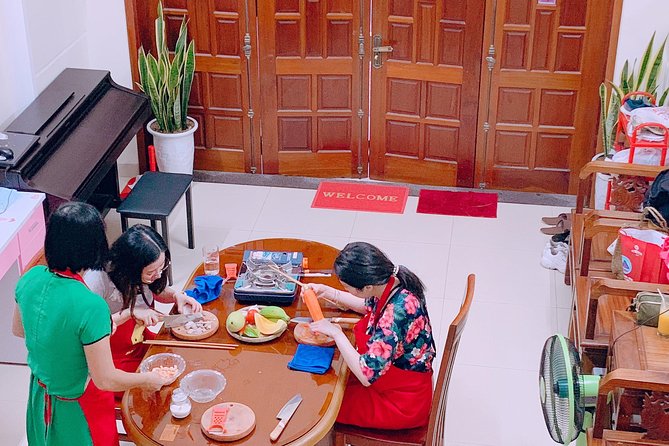
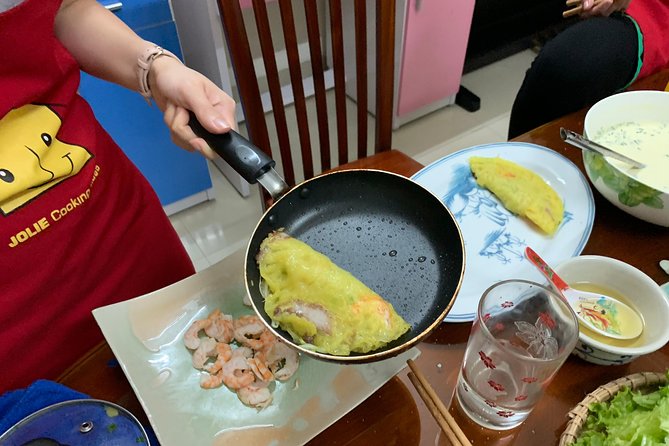
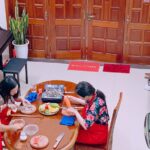
After the village and market, you head to a welcoming local home for the hands-on part. This is where you prepare a traditional Vietnamese dish step by step, then sit down to enjoy what you cooked in a relaxed, family-style setting.
I value the “family-style” element because it changes the energy. You’re not eating in a classroom line. You’re eating as part of the meal itself, which makes the whole experience feel less like a performance and more like a real lunch.
The class is also described as clean and well organized, which matters when you’re doing something practical like cooking. You want equipment that’s ready and an instructor who can keep things moving without rushing you.
Because it’s hands-on, you’ll likely handle key parts of prep—cutting, mixing, and assembling—rather than only watching. And with a cap of 10 people, you should have a better chance of getting help when something doesn’t look right.
You can also read our reviews of more shopping tours in Da Nang

What you can cook, and how the flavors make sense
The overview frames Vietnamese food as light on fat but big on flavor and contrasting textures. That’s not just a slogan; it’s a cooking blueprint. Most Vietnamese dishes depend on balancing aromatics, acidity, saltiness, and sweetness, with herbs and fresh elements adding crunch and lift.
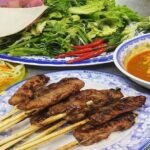
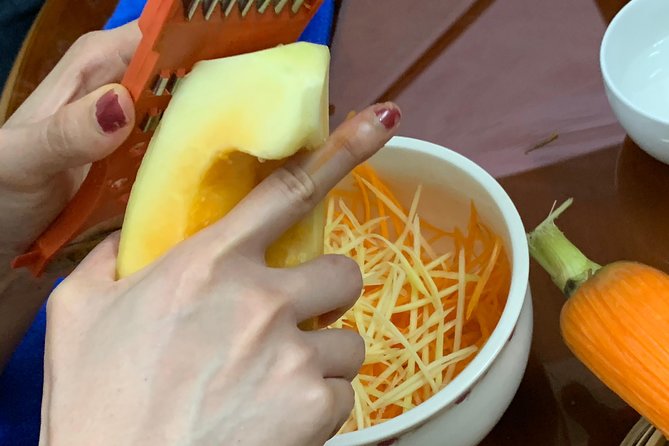
From the class content shared in feedback, the menu can include classics like Pho Bo, papaya salad, pancake rolls, and aubergine hot pot. Even if your exact menu differs, the core learning is similar: you’ll work through a traditional dish, not a “tour version.”
Why this matters for you after the tour: if you learn how ingredients work together in one dish, it becomes easier to adjust recipes later. You’ll know what you’re aiming for—like freshness in herbs, correct seasoning balance, and the idea that toppings and sauces are part of the structure, not an afterthought.
One more reason this is memorable: you finish by eating your own cooking. That locks in the lessons. You’ll understand the taste you’re chasing, and it makes the next home-cooked attempt much more likely to succeed.
Guides in English and French: the advantage of asking real questions
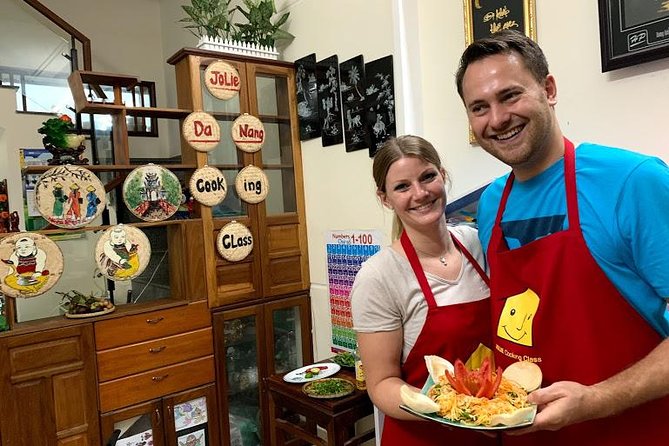
A big part of why this experience gets strong praise is the way it handles questions. Your guide speaks both English and French, so language isn’t a barrier to learning what you actually want to know. If you’re curious about ingredient substitutions or why one step comes before another, the format is set up for you to ask.
In particular, feedback points to instructors like Hana and Blue bringing high energy and a fun tone. That doesn’t mean it’s chaotic. It usually means the guide is comfortable explaining and guiding rather than just lecturing.
For you, this is the difference between a “good meal” and a “skills you keep.” If you leave with cooking confidence, you’re more likely to cook again instead of only craving the memory.
Value for $60: what’s included and why the price feels fair
At $60 per person, it’s worth looking at what you’re actually paying for. You’re not just paying for a recipe sheet. The price covers:
- the vegetable village and market visit
- Vietnamese coffee tasting
- the hands-on cooking class
- all ingredients and cooking equipment
- transportation during the experience
- the meal you prepare
When a tour includes the ingredients and meal, it reduces the usual “hidden costs” that pop up on food experiences. You’re also getting a guide and a small-group setup, which is a real service—especially during market shopping when you want accurate explanations fast.
Also, it’s booked often enough that planning ahead helps. If you’re visiting in peak season, it’s smart to reserve early rather than assuming you can walk up.
Getting there at 9 Hàm Tử: making logistics painless
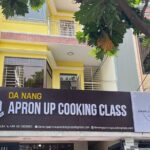
You start at 9 Hàm Tử, Bắc Mỹ Phú, Ngũ Hành Sơn, Đà Nẵng 550000, Vietnam, and the experience ends back at the meeting point. That means you’ll want to plan your own way in and out, since hotel pickup/drop-off isn’t included.
The good news: it’s described as near public transportation. So if you’re staying around central Da Nang, it should be manageable to reach the meeting address without stressing.
A practical tip: arrive a few minutes early so you can get settled before the village walk and not feel rushed when the group starts moving. Since the day is hands-on, being late can throw off your pace.
And don’t forget your mobile ticket. It’s listed as the delivery method, so have it ready on your phone.
Should you book this farm-to-table class in Da Nang?
Book it if you want more than a restaurant lunch. This class is built for people who care about ingredients, want a market education, and like learning by doing. The combination of farm village walk + Market Han coaching + cooking in a local home is exactly what makes it useful after your trip.
Skip it or think twice if you strongly prefer hotel pickup. Since transportation during the experience is included but the start is at a fixed address, you’ll need to handle your own arrival.
If your goal is to leave with the confidence to cook a traditional Vietnamese dish and not just the memory of one meal, this is a very solid pick. The price makes sense because it includes shopping, coffee tasting, cooking equipment, and the lunch you prepare—and the small-group setup keeps you from getting lost in the crowd.
FAQ
How much does the Da Nang farm-to-table cooking class cost?
It costs $60.00 per person.
How long is the experience?
The duration is about 4 hours 30 minutes.
Is there hotel pickup or drop-off included?
No. Hotel pickup and drop-off are not included. The tour starts and ends back at the meeting point.
Where is the meeting point?
The meeting point is 9 Hàm Tử, Bắc Mỹ Phú, Ngũ Hành Sơn, Đà Nẵng 550000, Vietnam.
How big is the group?
This activity has a maximum of 10 travelers, so it’s a small-group experience.
What’s included in the price?
Included are the vegetable village and market visit, Vietnamese coffee tasting, the hands-on cooking class, all ingredients and equipment, transportation during the experience, and the meal you prepare.
What’s not included?
Personal expenses are not included.
Do the guides speak English?
Yes. The guide speaks both English and French.
What is the cancellation policy?
You can cancel for free up to 24 hours in advance for a full refund, and cancellations made less than 24 hours before the start time are not refunded.