REVIEW · DA NANG
Da Nang: Golden Bridge, Lady Buddha, Marble Mt & Am Phu Cave
Book on GetYourGuide →Operated by LAGOM TRAVEL · Bookable on GetYourGuide
Golden Bridge photos start the day, and this private 8-hour loop keeps feeding you wow moments with Linh Ung Pagoda and the Golden Bridge. I especially like the mix of Buddhist architecture up on Monkey Mountain and the panoramic viewpoints from the Marble Mountains. One drawback to plan for: entrance fees are not included, and if Ba Na Hills is foggy or rainy, the bridge views can be hit-or-miss.
What makes it work so well is the pacing and comfort. You start with hotel pickup in Da Nang, then you move location to location by private car with an English-speaking driver, with a bottle of water included. Dress for real walking and cooler air on the hills: a jacket and comfortable shoes are essential.
In This Review
- Why this Da Nang highlights route feels worth it
- A route of Da Nang icons in one private 8-hour day
- Linh Ung Pagoda on Son Tra Peninsula (Monkey Mountain)
- Marble Mountains: Buddha stonework and viewpoint time
- Am Phu Cave on Water Mountain: nature plus spiritual meaning
- Ba Na Hills and the Golden Bridge: floating among the clouds
- Price and logistics: what $14 covers and what you pay at the gate
- The private driver experience: comfort, safety, and real explanations
- What to wear, how to pace, and when the day feels hardest
- Who should book this tour, and who should skip it
- Should you book this Da Nang highlights route?
- FAQ
- How long is the tour?
- Is this a private tour?
- Where does the tour start and end?
- What is included in the price?
- Are entrance fees included?
- Do I need to pay for food and drinks during the tour?
- Do you provide a tour guide?
- What should I wear?
- Is the tour wheelchair accessible?
- Can I cancel for a refund?
Why this Da Nang highlights route feels worth it
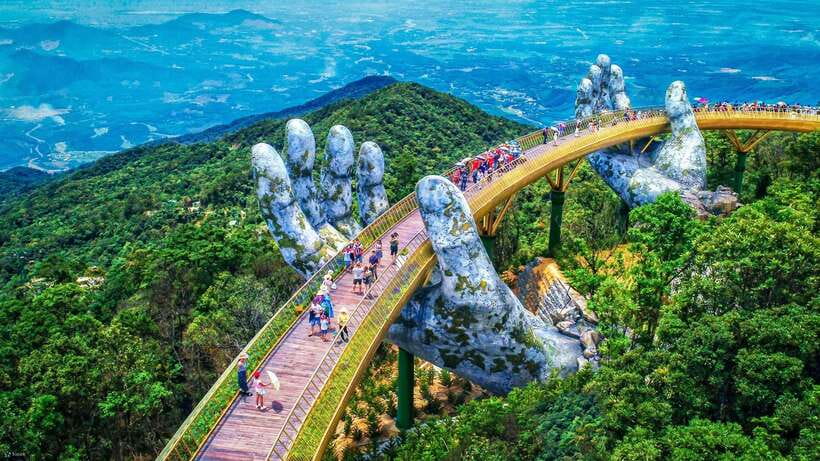
- Golden Bridge at Ba Na Hills (1,414 meters): the famous stone-hand walkway comes with big elevation and big photo potential.
- Linh Ung Pagoda on Son Tra Peninsula: modern Vietnamese Buddhism, ocean views, and a scale that makes the trip feel more than just a quick stop.
- Marble Mountains viewpoints: limestone and marble hills with Buddha statues and religious stonework along the way.
- Am Phu Cave (about 300 meters): a natural cave tied to Buddhist ideas and Vietnam War-era significance.
- Private transport, low stress: you handle the sightseeing; your driver handles the road timing.
A route of Da Nang icons in one private 8-hour day
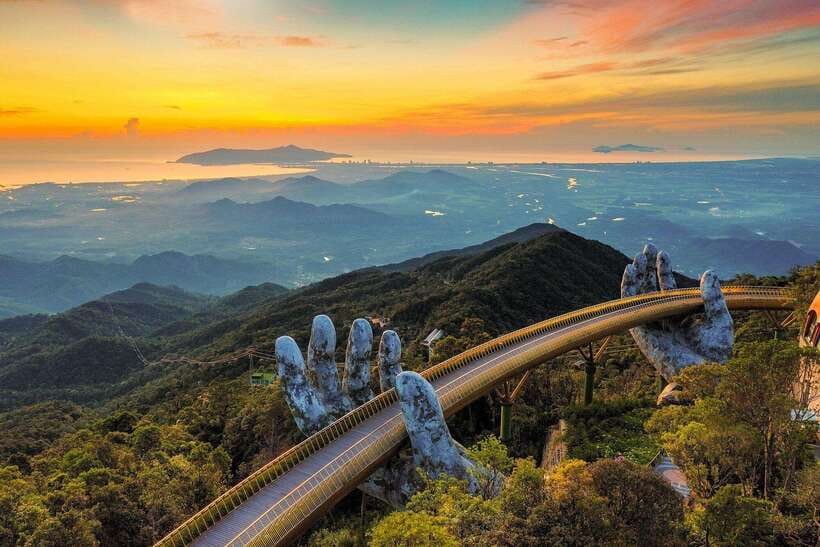
This is the kind of day that fits well when you want breadth without sprinting. You get a clean sequence: Linh Ung Pagoda, Marble Mountains, Am Phu Cave, then Ba Na Hills for the Golden Bridge. It’s not just ticking off names. Each stop has a different “why”: spirituality, views, geology, and a Vietnam-famous modern landmark.
Because it’s private, you’re not stuck waiting on a group rhythm. Your driver also plays a real role in keeping the day smooth—where to go first, how long to linger, and how to move efficiently. The trade-off is simple: the price you see doesn’t automatically include the gate fees once you’re up at the paid attractions.
Expect a full day that still feels comfortable. The tour includes a private car, tolls and parking, and a bottle of water—so you spend less time thinking about logistics and more time looking up at the views.
You can also read our reviews of more tours and experiences in Da Nang.
Linh Ung Pagoda on Son Tra Peninsula (Monkey Mountain)
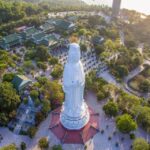
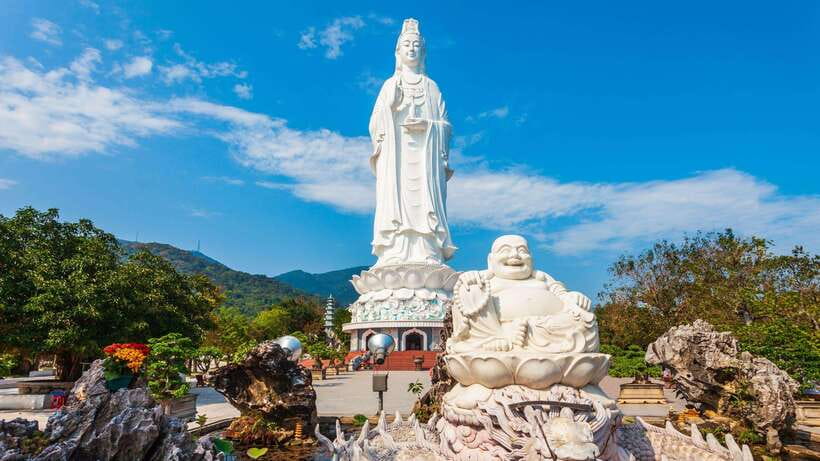
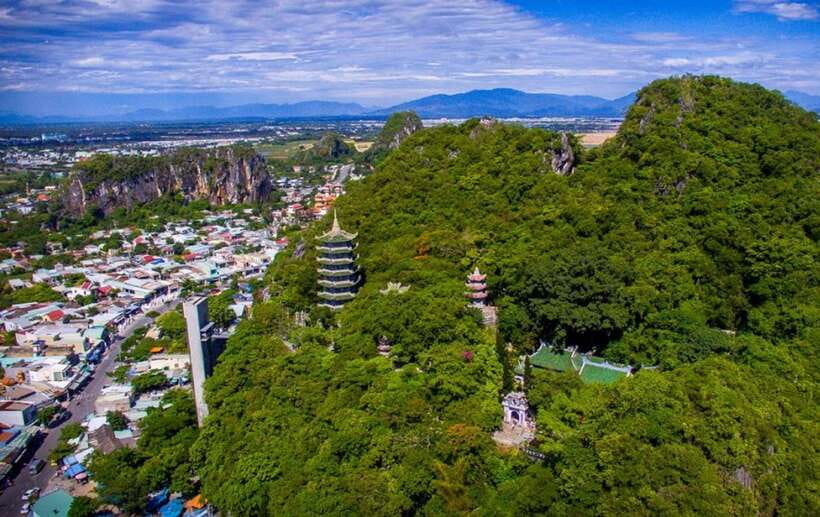
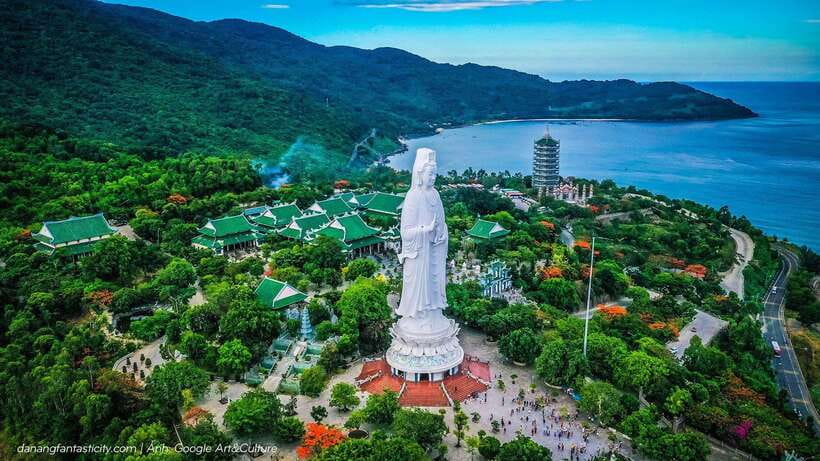
Linh Ung Pagoda—also known as the Lady Buddha pagoda—is on the Son Tra Peninsula, commonly called Monkey Mountain. This is Da Nang’s largest pagoda, and it’s the kind of place where scale matters. The architecture is the point, but so is the setting: the air, the quiet, and those ocean views that show up as the day gets going.
What I like here is that it’s not just “pretty buildings.” The pagoda is tied to Buddhist practice and symbolism, so your photos come with context. You’ll also see religious stonework—Buddha statues and traditional architecture—blended into the mountain feel instead of dropped into a random viewpoint.
Practical tip: go slowly and give yourself a moment before you start photographing. At a place like this, the best pictures come after you settle in—when you notice angles, not just buildings. And yes, it’s worth taking a jacket because hill weather can feel different as you climb.
If you’re lucky with your driver, you’ll get extra color. Many experiences in the feedback praise drivers for translating the spiritual and cultural meaning in plain English, not just pointing and saying “this is it.”
Marble Mountains: Buddha stonework and viewpoint time
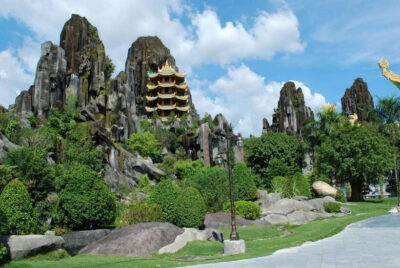
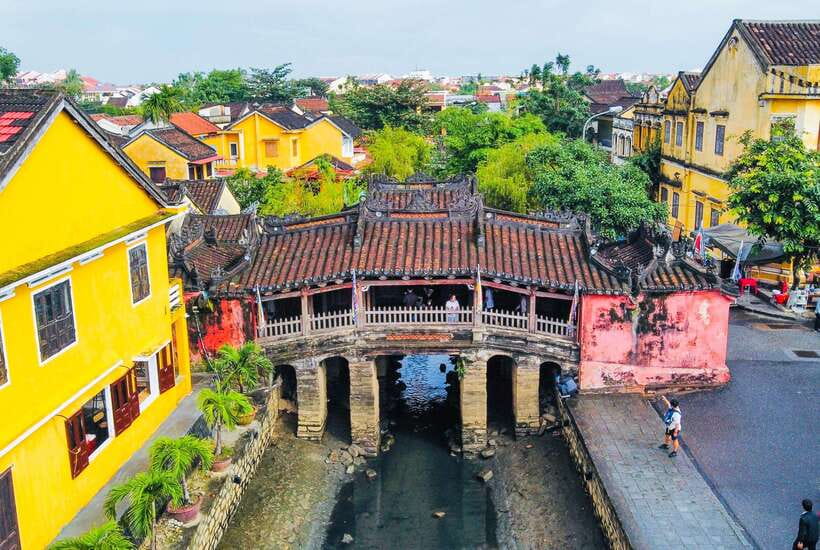
After Monkey Mountain, you move to the Marble Mountains, a cluster of limestone and marble hills rising above the surrounding villages. The vibe changes fast. Instead of coastal calm and temple architecture, you’re in a terrain that feels carved—full of caves, stone statues, and religious details that look like they’ve been placed where nature already had a plan.
This stop is a key part of why the tour feels balanced. The Marble Mountains aren’t only a walk with stairs and stops; they give you a chance to see how religion and local craft live close to the rock itself. As you wander, you’ll find stone sculptures and Buddha figures, plus religious architecture that fits the landscape instead of fighting it.
The big win is the panoramic potential. Marble Mountains viewpoints reward patience: you don’t need to rush every platform. Take your time, look out, and then come back in for the details. That’s how you get both the wide-angle view and the close-up cultural texture.
A small consideration: this day can get heavy on walking. If you’re not used to steep paths and uneven surfaces, comfortable shoes matter more than you think. The tour explicitly flags comfy shoes, and it’s there for a reason.
Am Phu Cave on Water Mountain: nature plus spiritual meaning
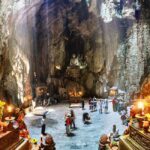
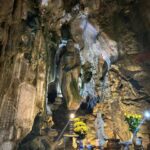
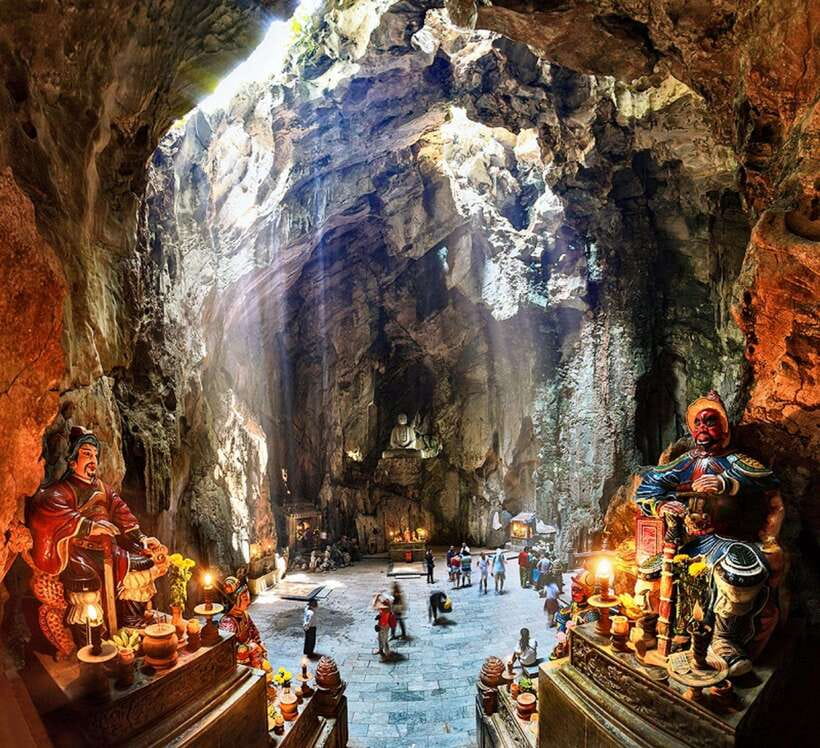
Next up is Am Phu Cave, about 300 meters long, located in Thuy Son (Water Mountain). Caves can sound like a quick “see the dark tunnel, move on” stop. This one has more to it. It’s known for dramatic chambers and historical significance during the Vietnam War. It’s also connected to Buddhist beliefs about life, karma, and the afterlife.
What you’ll notice is the way the cave becomes a storytelling space. Geology gives you the drama; culture gives you a reason to care. If you’re the type who likes understanding what a place represents—rather than only what it looks like—this stop tends to land well.
Practical tip: bring a jacket layer even if the morning starts warm. You might also want to slow down inside the cave. Natural chambers usually mean varied footing and a damp feel.
Another plus: it’s a different sensory experience from the temples and open viewpoints. You’re switching modes—stone details, then wide views, then enclosed chambers. That variety helps the day stay interesting even when you’ve been on the road since pickup.
Ba Na Hills and the Golden Bridge: floating among the clouds
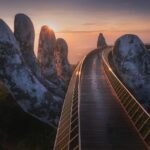
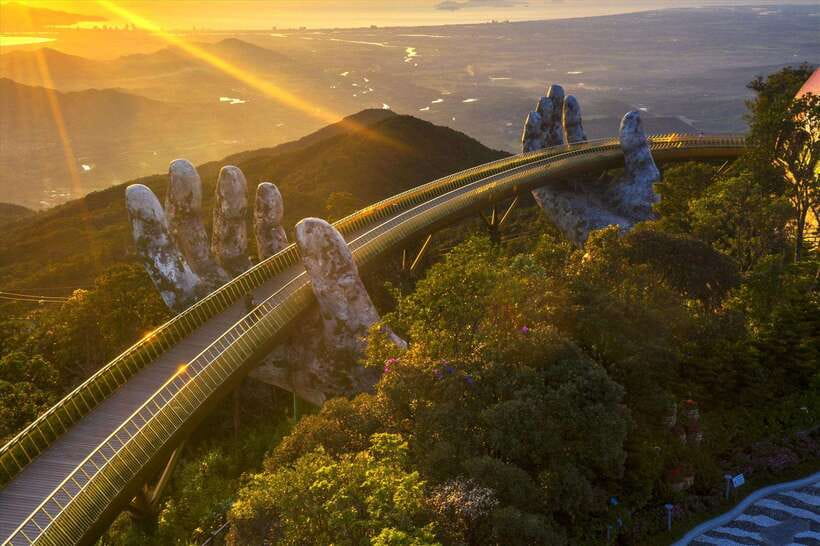
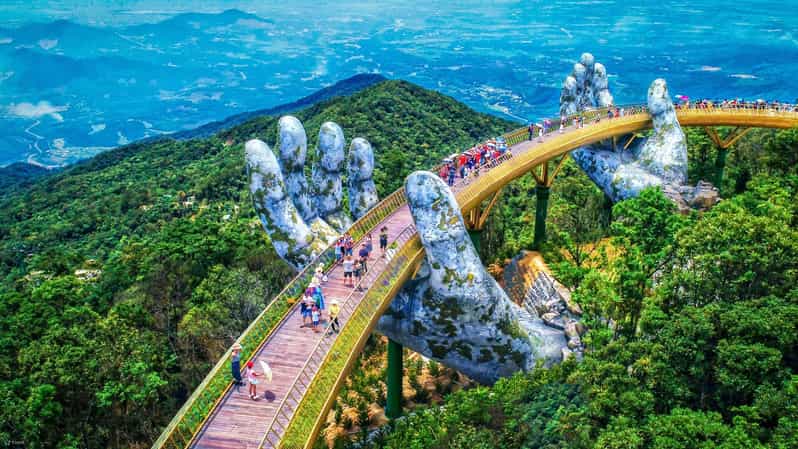
Then you go up to the big-ticket photo magnet: the Golden Bridge at Ba Na Hills, sitting around 1,414 meters above sea level. This is the walkway supported by giant stone hands, and it’s hard not to stare. The structure feels theatrical, but the setting is real—altitude, mist potential, and that sense of being up above the city.
Here’s the practical truth: weather affects what you get. The feedback includes examples where rain or mist limited Golden Bridge visibility. That doesn’t make the day a loss. It just means your best plan is to treat the bridge as the highlight, but not the only purpose of Ba Na Hills.
If visibility is good, you’ll get that signature “bridge in the clouds” effect. If not, you’ll still have the experience of going up into a different climate and seeing the scale of the landmark. Some guides in the feedback also adjusted the day when weather blocked the view—one person even described shifting to other city time when the fog rolled in.
What I recommend: go in with the mindset of flexible photos. Shoot early from different angles, then let your time be about the moment, not just the perfect shot.

Price and logistics: what $14 covers and what you pay at the gate
The headline price is $14 per person for a day that includes a private car, a private English-speaking driver, bottle of water, and toll and parking fees. For central Vietnam, that’s strong value when you’re trying to string together multiple destinations without the headache of buses, changing transport, and timing problems.
The catch is clear: entrance fees are not included, and food and drinks are not included either. Ba Na Hills especially is the kind of place where entrance costs can become a real line item. There’s also no separate tour guide included—your driver is the one who explains and helps you move through stops.
So how do you judge value? You decide what you want most:
- If you want the variety of pagoda + mountains + cave + Golden Bridge in one shot, the structure saves time and stress.
- If you want to fully explore Ba Na Hills as an all-day amusement complex, you might feel like a portion of the park is handled too quickly. One feedback point even suggested spending a whole day at Ba Na instead of bundling it.
Bottom line: the tour is a high-efficiency highlights run. Budget extra for entrance tickets and small meals/snacks, and you’ll feel like you made the day work for you.
The private driver experience: comfort, safety, and real explanations
In practice, this kind of tour lives or dies by the driver. The feedback here is unusually consistent about the service level. Many guides are praised for safe driving and strong English, and several people mention guides who take photos, share context, and keep the day moving smoothly.
You’ll see names repeatedly in the feedback: Lam, Ho Huy, Duc, Phap, Than, Trung, Phong, Cuong, Truong, Ngoc, and Minh. That matters because it hints at something real: you’re not just buying a car. You’re getting someone who often acts as your interpretive layer.
Also, some guides go beyond the basics. One person mentioned snacks and drinks during the trip, including coconuts. Another described breaks and photo help as part of the service. Still, treat those as nice extras, not guarantees—your essentials are water plus a competent English-speaking driver.
If you want to get the most out of the day, ask quick questions as you travel between sites. It’s an easy way to transform a list of landmarks into a connected story about Buddhism, mountain culture, and modern Vietnam’s landmark making.
What to wear, how to pace, and when the day feels hardest
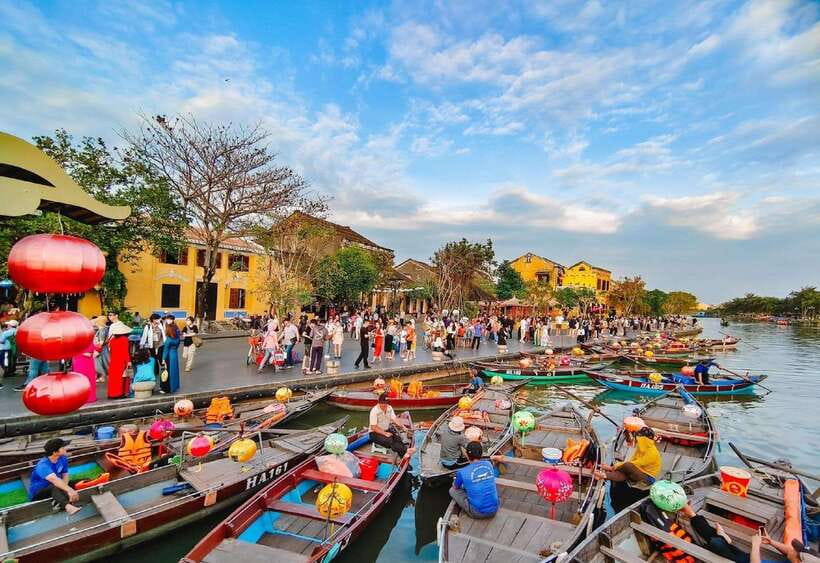
You’ll walk. You’ll climb. You’ll spend time outdoors at hill and mountain elevations. That’s why the tour calls out a jacket and comfortable shoes. Even if Da Nang feels warm, you’re heading to a high point at Ba Na Hills, and the cave plus pagoda steps can cool you down fast.
Pacing is the secret. This is an 8-hour route with multiple stops, so you don’t want to spend 45 minutes at the first viewpoint and end the day rushing. Use a simple rhythm:
- Look first, then photograph.
- Take one slower moment in each main stop (pagoda, viewpoint, cave, bridge).
- Save your energy for the Golden Bridge area, since that’s where visibility can shift.
Weather is the other factor. The feedback includes fog and heavy rain affecting the bridge view. When that happens, the day still has value because the other stops are not “weather-dependent icons.” You can still enjoy Linh Ung Pagoda, Marble Mountains, and Am Phu Cave even if Ba Na Hills turns misty.
Who should book this tour, and who should skip it
This tour fits best if you want a high-impact highlights day and you don’t want to plan routes or transport between Da Nang’s top sights. It’s also great for couples or solo travelers who like private service and a driver who can explain what you’re seeing.
You might want to skip it if you have mobility limitations. The tour is not suitable for wheelchair users. Even if you can manage short walks, the combination of pagoda steps, mountain paths, and cave walking could be tough.
It also might not suit you if you’re the type who needs a full deep day at Ba Na Hills only. Since Golden Bridge is the main Ba Na Hills focus here, you may feel like you’re “visiting the park,” not exploring it. In that case, consider treating Ba Na as its own day and keep the rest of Da Nang highlights for another block.
Should you book this Da Nang highlights route?
Yes, I’d book it if your priority is seeing Linh Ung Pagoda, Marble Mountains, Am Phu Cave, and the Golden Bridge in one calm, organized day with private transport. The value is strongest when you factor in what’s included: private car, English-speaking driver, and water, with tolls and parking covered.
But book it smarter: budget extra for entrance fees, pack for changing weather, and accept that the Golden Bridge view depends on conditions. If the bridge is foggy, the day still has real substance thanks to the pagoda, mountains, and cave.
If this is your first time in Da Nang and you want the best-known icons without turning it into a logistics project, this route is a solid choice.
FAQ
How long is the tour?
It runs for 8 hours.
Is this a private tour?
Yes. It’s listed as a private group.
Where does the tour start and end?
You get hotel pickup in Da Nang and you’re dropped off back at your hotel in Da Nang city center at the end.
What is included in the price?
Included items are private car, private English-speaking driver, bottle of water, and toll & parking fees.
Are entrance fees included?
No. Entrance fees are not included.
Do I need to pay for food and drinks during the tour?
Yes. Foods and drinks are not included.
Do you provide a tour guide?
No. A tour guide is not included. Your English-speaking driver is the main person helping with explanations during the day.
What should I wear?
Bring a jacket and comfortable shoes.
Is the tour wheelchair accessible?
No. It is not suitable for wheelchair users.
Can I cancel for a refund?
Yes. There is free cancellation up to 24 hours in advance for a full refund.