REVIEW · DA NANG
1 Hour Taster Surf Lesson at My Khe Beach
Book on Viator →Operated by Da Nang Outdoor Adventures · Bookable on Viator
A first surf lesson should be simple and fast, and this one fits the bill. I like the small group coaching and how it pairs a short instruction block with extra board time, so you get more than just a quick taste.
One big plus I’d highlight is how the program is built around catching waves quickly, even if you’ve never surfed before. Another thing I really like is that gear is included—rash vest, wetsuit, wax, and a board—so you can show up and just focus on learning.
The only real catch is weather. This experience needs good conditions, and the sea can be rough, which can affect how easy it feels once you’re in the lineup.
In This Review
- Key points before you go
- Why My Khe Beach Works So Well for a First Surf
- What You Get for $28: Lesson + Gear + 2 More Hours
- How the 3-Hour Flow Feels on the Sand and in the Water
- Small-Group Coaching and Why Coach Owen Gets Mentioned
- Gear, Comfort, and Safety Basics You’ll Be Glad You Didn’t Skip
- Weather Reality: What If the Sea Looks Unfriendly?
- Best Fit: Who This Taster Lesson Is Perfect For
- Price and Logistics Without the Headache
- Should You Book This 1-Hour Taster Surf Lesson?
- FAQ
- FAQ
- How long is the surf taster lesson?
- Do I need surfing experience?
- What gear is provided?
- What do instructors teach you during the beach demo?
- How much time do I actually spend on the water?
- Is the class size small?
- What if the weather is bad?
Key points before you go
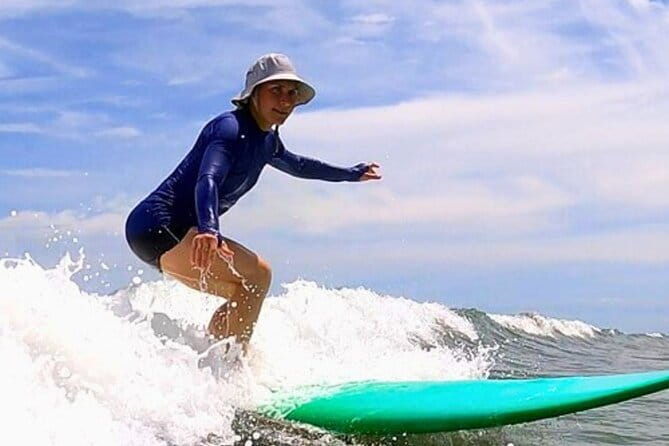
- 1:4 coaching ratio so you’re not stuck guessing what to do next
- No experience needed: you’ll start with paddling, pop-up, balance, and safety
- 50 minutes in the water after a short beach demo
- 2 extra hours of board rental right after your lesson to practice solo
- Rash vests, wetsuits, wax, and surfboards included—less hassle, better value
- Very small groups (max 6, and the instruction is effectively limited to 4 surfers)
Why My Khe Beach Works So Well for a First Surf
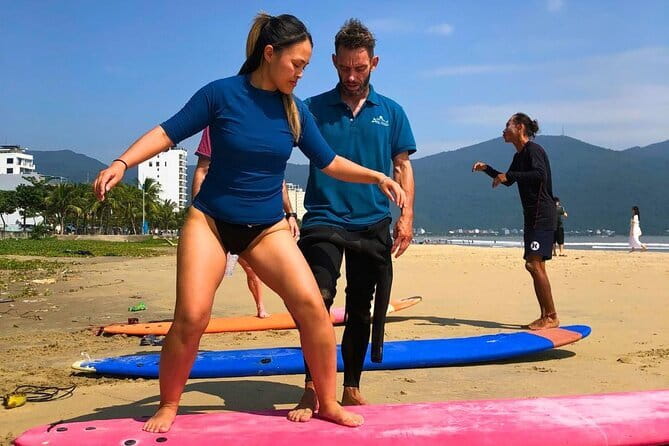
My Khe Beach is one of Da Nang’s best calls if you want a beginner-friendly introduction to surfing. The key idea here is not just the location—it’s the way the lesson is structured around a real beach start and then short, focused time in the waves. That matters for first-timers. You get guidance early, then you’re not waiting forever to try.
This setup also helps you learn the right sequence. Beginners often try to do everything at once. Here, you’ll go through basics like paddling, pop up, and balance before you’re asked to chase waves. And because the experience is built for people with no surf background, the instructor’s job is to help you build confidence in small steps.
You’ll also get a feel for how surfboarding behaves at speed—without needing to “figure it out” alone. That’s a big deal. Even when conditions aren’t perfect, having a plan beats improvising every movement on your own.
You can also read our reviews of more tours and experiences in Da Nang



What You Get for $28: Lesson + Gear + 2 More Hours
At $28 per person, this is the kind of surf lesson that feels practical rather than precious. You’re paying for an hour of instruction, but the real value is that you don’t lose the momentum after the lesson ends. You get two extra hours of complimentary board rental, which gives you time to repeat the basics while your brain is still tuned to what your instructor showed you.
Gear is included too: rash vests, wetsuits, surfboards, and wax. For many beginners, that’s the difference between a “cool idea” and actually trying it. Buying or borrowing the right gear is usually where costs and stress creep in. Here, your main job is to learn.
Limited class size is another quiet value booster. The smaller the group, the more time your coach spends correcting you instead of rotating between too many students. In the reviews, coach Owen is mentioned specifically for correcting mistakes and keeping things fun, which is what you want in a taster session: clear feedback, not just encouragement.
Bottom line: this is priced for action. You’re not paying to watch someone else surf—you’re paying to do it, get coached, then keep practicing.
How the 3-Hour Flow Feels on the Sand and in the Water
The experience runs about 3 hours total. Even though that sounds short, it’s paced well for beginners.
First, you start with roughly 10 minutes on the beach. That’s where you’ll cover the fundamentals in plain language:
- how to paddle
- how to pop up
- how to find balance
- and some water safety basics
This beach block matters because it prevents the most common first-session problem: people go straight into the water without a plan. With this format, you’re already rehearsing the steps before you commit to waves.
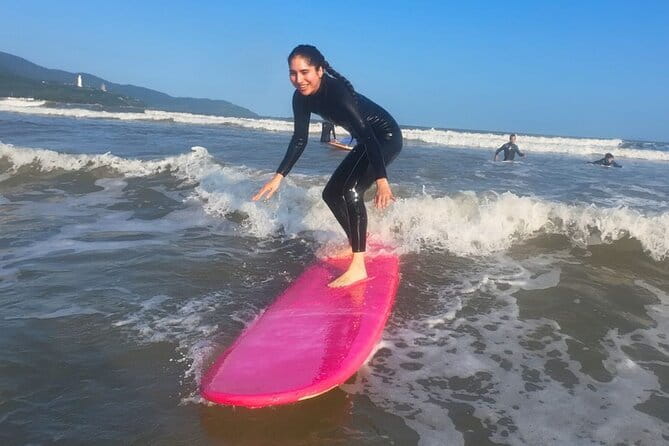
Then you head into the surf. The instructor gives a quick demonstration so you can see how a wave catch usually works—close enough to copy, without overcomplicating it. After that, you spend about 50 minutes in the water catching waves with your instructor.
Finally, you continue with 2 more hours using the surfboard on your own. That’s the part many shorter lessons skip. You get a chance to test what worked for you—without waiting for the instructor to “call it” at the end of the lesson.
If you’re wondering why the timing works: it gives you coaching during the hardest part (learning how to start), then practice during the part where muscle memory takes over. That’s how you move from awkward to at least-sort-of-surfing.
Small-Group Coaching and Why Coach Owen Gets Mentioned
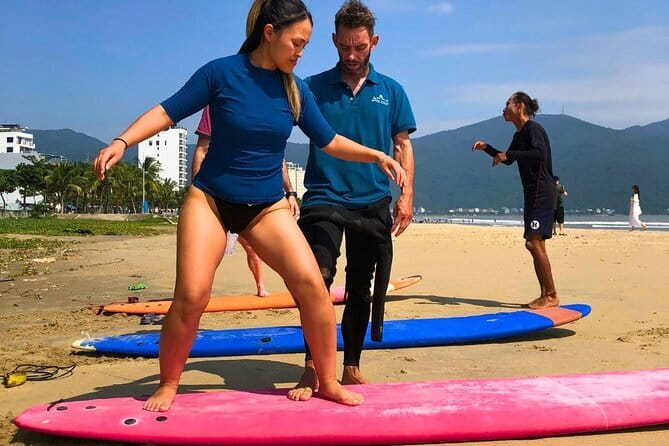
What you’re really buying with this surf lesson is feedback. With small groups and an effective 1:4 instructor/student ratio, you’re more likely to get individualized correction. That can sound like marketing, but it’s practical: you can’t improve what nobody points out.
The best example is in the way the lesson is described with coach Owen. Even for someone who’d surfed a few times before, he was able to spot and correct mistakes. That tells you the coaching isn’t only for beginners who know nothing. It’s tuned to technique, which is exactly what you need when you’re trying to make progress in a short time.
A small group also helps you stay calm. Surfing has a learning curve, and first-time nerves are real. When there are fewer students, you spend less time waiting and more time trying. That keeps your confidence from draining between turns.
The lesson is also designed so you’re not overwhelmed. You get a beach demo, then structured wave time, then extra board time. It’s a clear arc: learn the moves, try the moves, then repeat them.
Gear, Comfort, and Safety Basics You’ll Be Glad You Didn’t Skip
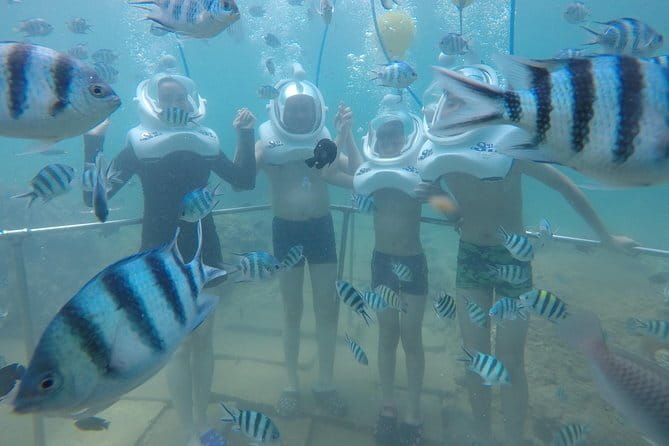
Included gear is a big deal on the water. You’ll get a rash vest and wetsuit, plus wax and the surfboard. That means you can focus on paddling and pop-up rather than worrying about sunburn, rubbing, or whether you’re cold.
The wetsuit also helps you stay comfortable long enough to actually practice. For beginners, the biggest risk is quitting early because the body feels off. Better comfort usually means more attempts.
On the instruction side, the lesson covers basics that go beyond just standing up:
- paddling technique (so you can get into position)
- pop up and balance (so you can translate effort into standing)
- water safety (so you understand what to do when you’re in moving water)
Even if your surfing doesn’t look pretty on day one, having those safety basics reduces the “unknowns.” And less stress usually means better learning.
In the reviews, one lesson is described as having rough sea conditions but still being an enjoyable experience. That lines up with what you should plan for: first surfing isn’t always smooth and easy. Gear plus safety instruction help you handle that reality.
You can also read our reviews of more tours and experiences in Da Nang
Weather Reality: What If the Sea Looks Unfriendly?
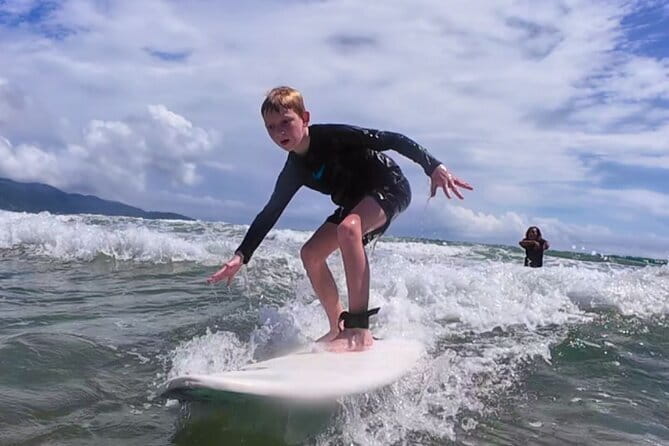
Surf lessons live and die by conditions. This one specifically requires good weather, and if it gets canceled due to poor conditions, you’ll be offered a different date or a full refund.
So here’s how I’d think about it if you’re planning your trip days: don’t schedule this as your only surfing option. Treat it as your “go if conditions are right” activity.
Also, don’t expect every wave to feel friendly, especially for your first session. Rougher water can make paddling harder and pop-ups less stable. But that’s where the value of having a coach shows up. The instructor can help you make quick adjustments in real time.
One review noted the sea was rough but it didn’t ruin the experience, and that’s exactly the mindset you want. Go in ready to learn, not ready to conquer.
If you get a decent weather window, you’ll likely leave feeling like you gained something real—because you’re not only riding. You’re learning how to ride.
Best Fit: Who This Taster Lesson Is Perfect For
This is built for people who want to try surfing without a long course.
You’ll probably love it if:
- you’re in Da Nang and want an activity that feels more hands-on than sightseeing
- you’re curious but don’t have surf experience
- you want short instruction plus time to practice immediately
- you like learning with correction, not just free time
It also seems to work for mixed skill levels, based on the coach being able to correct mistakes for someone who’d already surfed a bit. So if you’ve stood up once or twice before, this can still be useful as a reset.
Most travelers can participate, and the lesson is designed to be accessible to beginners. It’s also offered with a small group cap, so it won’t turn into a chaotic crowd event.
One more practical thought: if you’re the type who hates waiting around, the 50 minutes in the water plus the 2 extra hours afterward is a solid fit. You’ll spend your time doing the thing.
Price and Logistics Without the Headache
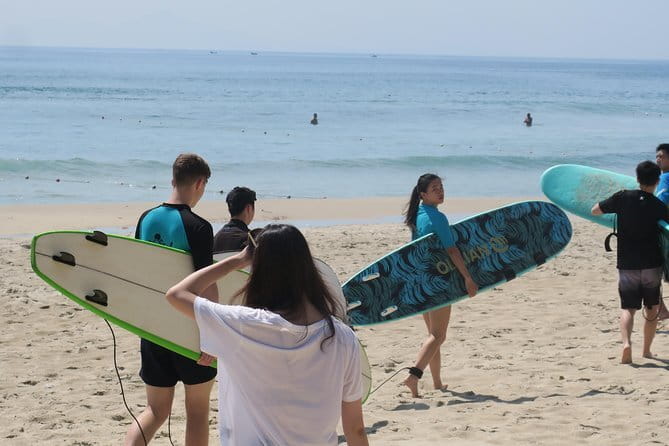
Let’s keep this simple. It’s $28 per person. You get:
- 1 hour instruction (with a beach demo and time in the water)
- 2 extra hours of surfboard use
- included wetsuit/rash vest, wax, and surfboard
So you’re not paying only for a quick lesson. You’re paying for coaching plus practice time. That makes the price feel reasonable for a beginner activity in a beach destination.
Meeting starts at 35 An Thượng 5, Bắc Mỹ An, Ngũ Hành Sơn, Đà Nẵng 550000. The activity ends back at the meeting point. You’ll use a mobile ticket, and it’s near public transportation, which helps if you’re staying nearby.
If you like being efficient with time, this schedule is easy to plug into a day. It’s long enough to learn and practice, but short enough that you’re not stuck all afternoon.
Should You Book This 1-Hour Taster Surf Lesson?
If you want a first surf session that’s beginner-friendly, coached, and immediately followed by practice, yes—book it. The combination of short, focused instruction plus two extra hours of board rental is what makes this more than a novelty.
I’d especially recommend it if you’re traveling with limited time or you don’t want to rent gear and figure surfing out by trial and error. The included equipment and the small group coaching reduce friction, and that’s where you get the best learning bang for your money.
Skip it only if your schedule is inflexible around weather. Since the experience depends on conditions, build in some flexibility. Surf is always more fun when the sea cooperates.
FAQ
FAQ
How long is the surf taster lesson?
It’s about 3 hours total. You get 1 hour of instruction and then 2 extra hours of board use after the lesson.
Do I need surfing experience?
No experience is necessary. You just need a willingness to learn.
What gear is provided?
Rash vests, wetsuits, wax, and surfboards are included.
What do instructors teach you during the beach demo?
You’ll get basics on paddling, pop-up, balance, and water safety, usually within about a 10-minute beach instruction segment.
How much time do I actually spend on the water?
After the initial beach instruction and a quick demonstration, you spend about 50 minutes catching waves with the instructor.
Is the class size small?
Yes. The lesson is limited to a small group (max 6 travelers), with a 1:4 instructor/student ratio mentioned for personalized coaching.
What if the weather is bad?
The experience requires good weather. If it’s canceled due to poor weather, you’ll be offered a different date or a full refund.