REVIEW · DA NANG
My Son Holyland in the Early Morning-UNESSCO World Heritage Site
Book on Viator →Operated by Private Tourguides in Da Nang Hoi An Hue · Bookable on Viator
Wake up early for a quieter My Son. This early-morning tour brings you to the UNESCO World Heritage site of My Son Sanctuary before the day heats up and the crowds build, with a guide explaining how the sacred complex evolved from the 4th to the 13th centuries. I love the focus on what you’re actually seeing—Hindu tower-temples and bas-relief decoration—so the ruins don’t feel like random stones.
I also like the practical side: pickup from Hoi An or Da Nang, comfortable private transport with strong A/C, and access to the site via electric cars followed by a short walk to the temple areas. The one real trade-off is the early start (pickup at 6:00 a.m.) and the fact the visit depends on good weather.
In This Review
- Key points worth getting up for
- Why start at 6:00 a.m. for My Son Sanctuary?
- Getting from Hoi An or Da Nang to My Son: electric cars that save your legs
- The heart of the visit: temple and tower areas from the 4th to the 13th century
- Cham engineering lessons: bas-reliefs and building without mortar
- My Son and the Champa Kingdom: why these temples mattered
- The jungle-valley views: when to slow down
- Price, included perks, and what you’ll actually spend
- What the timing feels like (and how to prep)
- Who should book this early morning My Son tour?
- Should you book this My Son early morning tour?
- FAQ
- What time does the tour start?
- Where do we go once we arrive at My Son?
- How long is the tour?
- What’s included in the price?
- Are meals included?
- Is there a set schedule for visiting the temples?
- What if the weather is bad?
- Is this tour private?
Key points worth getting up for
- 6:00 a.m. timing: You reach My Son early, when the experience feels calmer and easier to take in.
- Electric-car access: Less scrambling, more time for the temples, carvings, and explanations.
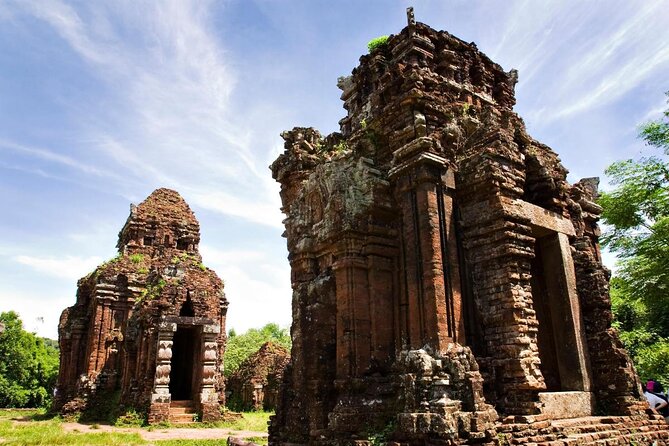
- Temples rebuilt across centuries: See how the complex shifted from the 4th to the 13th century.
- Cham construction without mortar: The guide explains how the Cham people built these towers and sanctuaries without mortar.
- Valley views around jungle: You get a strong sense of place, not just a walk among ruins.
Why start at 6:00 a.m. for My Son Sanctuary?
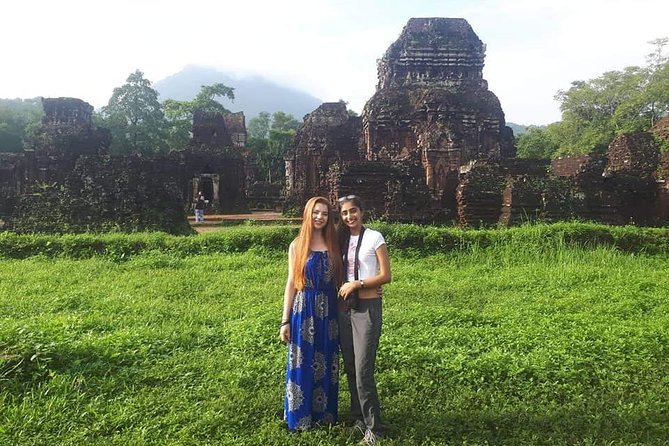
My Son is one of those places where the start time changes everything. Going early means you spend more of your visit in the soft light of the morning and less time fighting the crush that can come later in the day. It also helps you enjoy the site at a slower pace, especially when you’re trying to understand details like bas-reliefs and how the temple areas connect.
This tour is built around that logic. You’re picked up at 6:00 a.m. in Hoi An or Da Nang, then you’re on your way to My Son with enough time to explore before the day becomes harder to enjoy. For a historical site like this, the calm matters because you’ll want to pause—on carvings, on tower shapes, and on the way the complex was organized for worship.
You can also read our reviews of more historical tours in Da Nang
Getting from Hoi An or Da Nang to My Son: electric cars that save your legs
Transportation is more than convenience here. The tour includes a private car or minivan with strong A/C, which is a relief on a morning when you’re still half-awake and the heat hasn’t fully arrived. It’s especially useful if you’re starting from Hoi An, since getting to My Son on your own can mean juggling schedules and extra transfers.
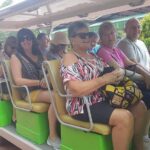
Once you reach the drop-off point, you access the site via electric cars. That matters because it keeps the focus where you want it: the ruins and the guide’s explanations. After the electric-car transfer, there’s a short walk to the temple areas. It’s not an all-day hike, but you should still expect some walking on uneven ground typical of ancient sites.
Bottom line: this is a setup that respects your time. You’re paying for comfort and a smooth route, not just for a seat on a bus.
The heart of the visit: temple and tower areas from the 4th to the 13th century
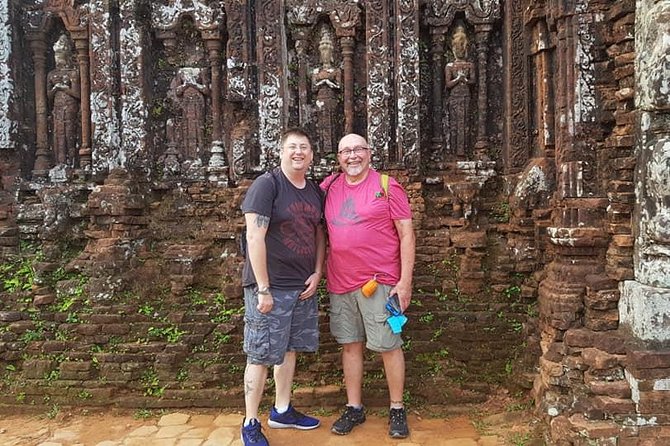
The main portion of your morning is spent exploring the temple and tower complex—covering the evolution of the site over a long span. The tour window is about 7:30 to 9:00, which is a focused amount of time for a site this meaningful. It’s enough to see the major parts without turning the visit into a long slog.
Here’s what you’re set up to experience in that time:
- Multiple temple areas within the sanctuary complex, not just one stop.
- Temples that were built and rebuilt across centuries, so you can understand that My Son wasn’t frozen in time.
- The visual rhythm of tower-temples, including what’s left of the Hindu elements and their decoration.
A good guide helps you connect what you see with what it likely meant for the people using the space. You don’t just look at ruins—you learn how they fit into worship and sacred storytelling. That’s the difference between taking photos and actually getting something from the experience.
If you like architecture, religious art, or old-world craftsmanship, this is the part that will feel most satisfying.
Cham engineering lessons: bas-reliefs and building without mortar
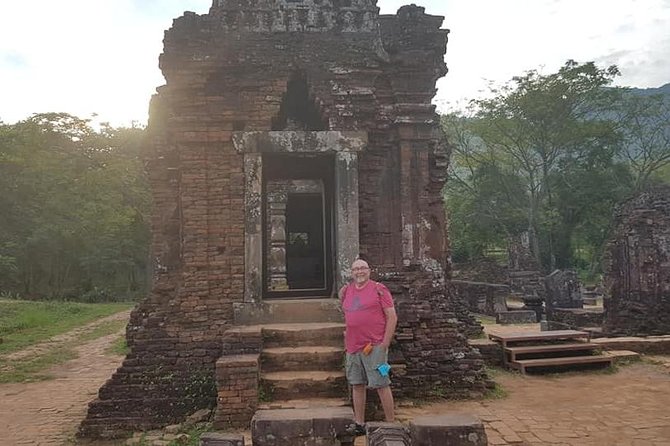
My Son is famous for more than age. The tour highlights details that many people miss when they visit without a guide—especially the bas-relief decoration and the construction method.
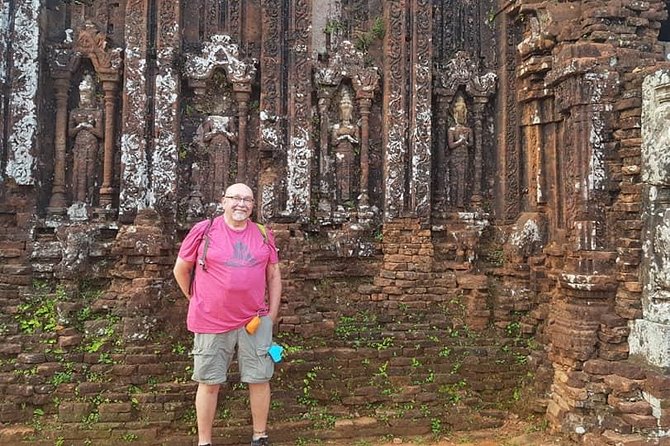
The guide explains the Hindu remains of tower-temples decorated in bas-relief. These are not just pretty carvings; they’re part of how the site communicates meaning—through the shapes, the ornament, and the storytelling style carved into stone.
Then you get one of the most intriguing claims about the construction: the Cham people built the temples without using mortar. Even if only part of a structure survives, the technique itself makes you pause. You start noticing how the stones are positioned and how the buildings could endure for so long.
This is a tour where the details can be the whole point. When someone walks you through what you’re looking at—what to focus on and why—you end up understanding the ruins as engineering and art, not just weathered ruins.
My Son and the Champa Kingdom: why these temples mattered
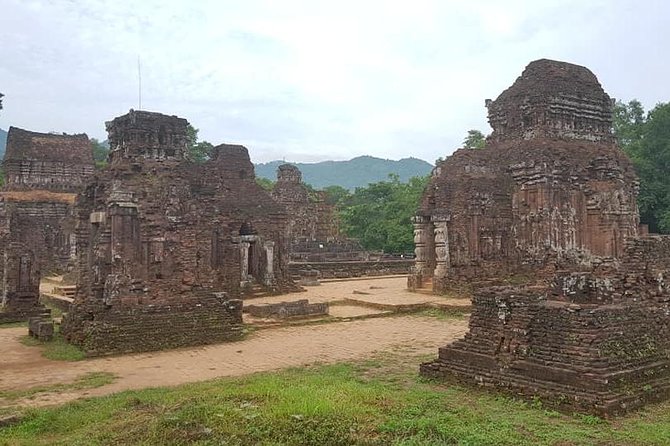
The tour also connects the sanctuary to the Champa Kingdom and how that relationship shaped the temples at My Son. Knowing that context matters, because it frames the site as a living cultural and spiritual project, not just an archaeological stop.
You’ll learn how the Cham people related to these temple spaces, and how the site’s spiritual purpose ties back to the broader power and identity of the Champa Kingdom. That kind of explanation is especially helpful if your prior knowledge is light. It gives you an anchor: when you look at the remains, you know what questions to ask.
And because the tour covers the complex in a structured way—moving through different areas—you don’t feel like you’re lost in a maze of stone. You’re following a story.
You can also read our reviews of more tours and experiences in Da Nang
The jungle-valley views: when to slow down
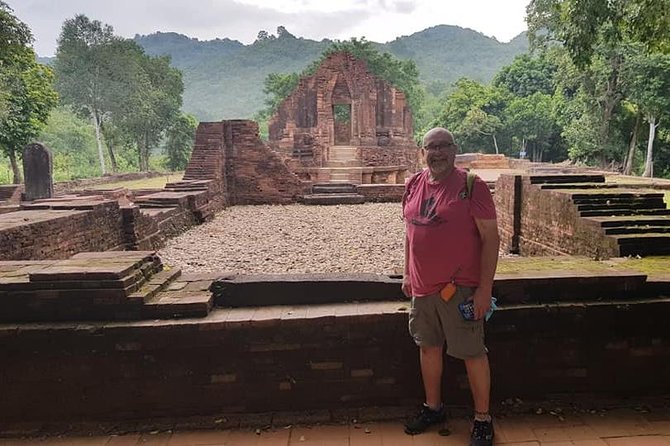
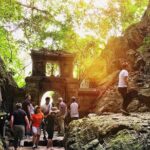
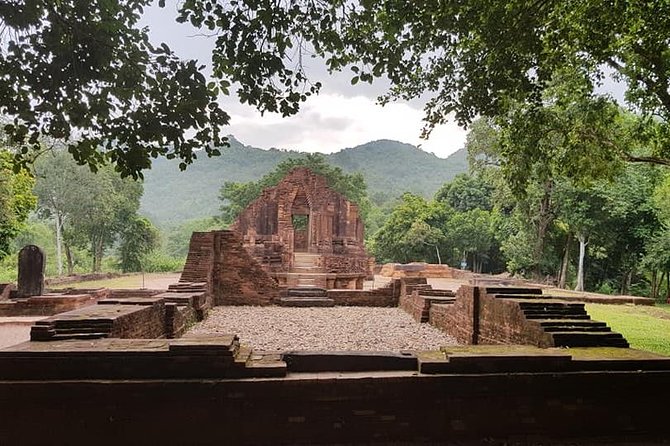
My Son sits in a valley with surrounding jungles, and the scenery isn’t just a backdrop. The valley setting helps you imagine how the site would have felt in daily life—enclosed, sacred, and visually connected to the natural world around it.
Even if you’re focused on carvings and architecture, take a moment at the right times to look outward. Morning views can be clear, and the contrast between green growth and old stone makes the temple remains easier to read in your mind.
This tour explicitly includes time to enjoy these views. It’s not a theme-park detour; it’s part of how the site works. Ancient places are often best understood when you feel the environment they were built within.
Price, included perks, and what you’ll actually spend
At $56.42 per person, this isn’t a budget-only option, but it’s also not priced like a luxury experience. You’re paying for three things that add up fast if you do them separately:
- Private pickup from Hoi An or Da Nang
- A professional English-speaking tour guide
- Admission tickets and on-site support like electric-car access
On top of that, bottled water is included, and the private vehicle has strong A/C, which is a real quality-of-life upgrade in Vietnam.
What’s not included is simple: meals and personal expenses. So plan on a breakfast if you need it before pickup, or expect to handle food afterward when you’re back around 10:15 a.m. If you’re the type who likes a second coffee or a quick snack after a morning outing, build that into your day.
What the timing feels like (and how to prep)
Your day runs fast: pickup at 6:00 a.m., arrive around 7:00, then sightseeing through the temple and tower complex until roughly 9:00, with a return to your hotel by about 10:15 a.m. That means you’ll still have most of the day left in Da Nang or Hoi An.
Prep-wise, consider this:
- Wear comfortable shoes. The walk after the electric car is short, but ancient sites don’t offer smooth floors.
- Bring sun protection. Even early mornings can turn bright quickly.
- Keep expectations realistic about ruins. My Son is impressive, but you’re visiting remnants, not fully restored buildings.
Also, the tour requires good weather. If weather conditions interfere, the operator will offer a different date or a full refund—so it’s worth checking the forecast when your morning is close.
Who should book this early morning My Son tour?
This experience is ideal if you want:
- A guided visit that explains what the carvings and temple forms mean
- Early access so you can take your time
- A smooth transfer that avoids the hassle of piecing together your own transport
It’s also a strong match for architecture lovers, history-curious visitors, and anyone who wants the “why” behind the ruins, not just the “what.”
If you prefer totally free roaming with no schedule, or if you dislike early mornings in general, you might find the 6:00 a.m. start demanding. But for most people, the early timing is exactly the point.
One more practical note: the English support is a big part of the value. A guide named Mr. Ty has been specifically praised for excellent English and clear explanations, which gives you a taste of the quality you should look for when you book.
Should you book this My Son early morning tour?
Yes—if you like your history with structure and your ruins with context. This tour hits the sweet spot: it gets you there early, moves you through the key parts of the sanctuary, and explains what matters most—bas-reliefs, tower-temple remains, Cham construction without mortar, and the Champa Kingdom connection.
Book it when:
- You want the UNESCO site experience without the stress
- You care about understanding what you’re looking at
- You’re staying in Da Nang or Hoi An and want an efficient half-day
Skip it if:
- You can’t handle a very early start
- You want a self-guided experience with no guidance at all
If those don’t apply, this is one of the better ways to see My Son with your time and attention intact.
FAQ
What time does the tour start?
The tour starts at 6:00 a.m. with pickup from your hotel in Hoi An or Da Nang.
Where do we go once we arrive at My Son?
You access the site via the provided electric cars, then take a short walk from the drop-off point to the temple areas.
How long is the tour?
The total duration is about 4 hours 20 minutes.
What’s included in the price?
It includes a private car or minivan with strong A/C, a professional English-speaking tour guide, entrance tickets, and bottled water. It also uses a mobile ticket.
Are meals included?
No. Meals and personal expenses are not included.
Is there a set schedule for visiting the temples?
Yes. The main temple and tower complex visit happens in the morning, with guided exploration of the different areas that make up the sanctuary.
What if the weather is bad?
The experience requires good weather. If it’s canceled due to poor weather, you’ll be offered a different date or a full refund.
Is this tour private?
Yes. It’s a private tour/activity, so only your group will participate.