REVIEW · DA NANG
Da Nang War Tour History: Spanish-French Attack to American Base
Book on Viator →Operated by Hung Le Travel-The Local Signature · Bookable on Viator
A coastline that keeps score of empires. This Da Nang tour strings together centuries of conflict, from older Champa-era kingdoms to the French-Spanish push in 1858 and the later American presence in the Vietnam War, with stops that also feel scenic and very day-use friendly. You’ll move between vantage points and memorial sites, and you’ll hear the story stitched into what you’re standing near, not just recited in a van.
I love the way the route links battlefield history to geography—Hai Van Pass and Son Tra Peak are a strong reminder that war here was about controlling roads, ridgelines, and access. I also like the human touch: English-speaking guide Hung Le comes across as enthusiastic and patient with photos, which matters when you want your pictures to actually match what you’re learning.
One possible drawback: it’s a long day—about 9 to 10 hours—and it helps if you’re okay moving at a steady pace. Also, the operator notes it requires good weather, and some entrances or museum tickets can depend on the option you choose.
In This Review
- Key things that make this tour worth your time
- A single Da Nang day that connects 3 different wars
- Marble Mountains: caves, temples, and stone carving culture
- Hai Van Pass and the tower tied to the 1858 attack
- Son Tra Peninsula: Magic Eyes radar, a landing zone, and a Spanish memorial
- Lady Buddha at Bai But Pagoda: a big visual break
- Da Nang Museum of Cham Sculpture: the Champa thread you’ll want to remember
- What you get for $29 and how that value plays out in real life
- Who this tour suits best (and who should pick a lighter day)
- Should you book this Da Nang War History tour?
- FAQ
- How much does the Da Nang War Tour History experience cost?
- How long is the tour?
- Do they offer pickup?
- Is this tour private?
- What is included in the price?
- Which major stops are part of the day?
- Are tickets included for the Cham Museum?
- What about American Radar and landing zone entry?
- Is the tour dependent on weather?
- What is the cancellation policy?
Key things that make this tour worth your time

- War history with real place names: Hai Van Pass, Son Tra Peninsula, and memorial spots tied to specific conflicts
- Magic Eyes of Indochina (American Radar): a Cold War–era style viewpoint on the Vietnam War in Da Nang
- Spanish Cemetery connection: a direct reminder of the losses from the 1858 French-Spanish attack era
- Lady Buddha on Son Tra: a big, visible counterpoint after heavier topics
- Da Nang Museum of Cham Sculpture: a Hindu-art thread that helps explain the longer Champa story
- Hung Le’s photo-friendly guiding: clear pacing and patience for remembering what you see
A single Da Nang day that connects 3 different wars

Da Nang’s story doesn’t sit neatly in one era. This tour is built around how the city and its coastline were repeatedly targeted, contested, and used as strategic real estate. Even if you’re not a military-history person, you’ll likely appreciate how the landscape explains the tactics: passes, peaks, bridges, and coastal access points show up again and again.
The best value here is that you’re not just hopping between “nice sights.” You’re moving through a narrative that links the older Champa period (with Hindu sculpture culture still preserved) to the 1858 French-Spanish attack and then to the Vietnam War American base era. If you like your sightseeing with context, this hits that sweet spot.
You can also read our reviews of more historical tours in Da Nang

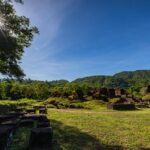

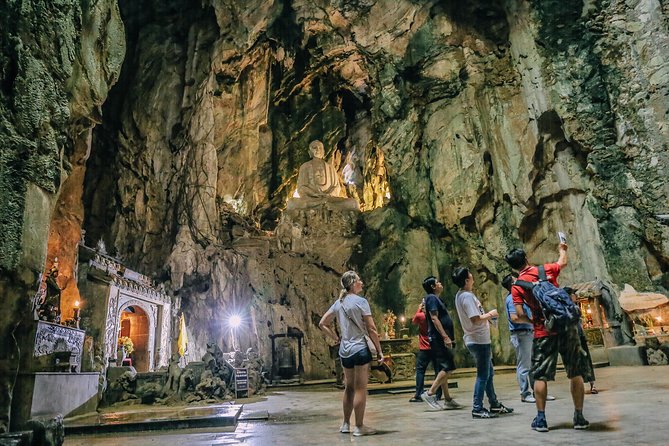
Marble Mountains: caves, temples, and stone carving culture

Marble Mountains is one of the easiest starts in Da Nang because it’s compact enough to feel like a real visit, but big enough to include caves and temple areas. Expect a mix of viewpoints, passageways, and long-lived religious spaces, all set in that distinctive limestone-and-marble terrain.
Two practical notes make this stop more enjoyable. First, this area rewards slow walking—there are lots of small details, not just one “main view.” Second, the tour mentions sculpturing activities, so you might see stone-carving culture in action while you’re there. If you’re buying small souvenirs later, it helps to already understand the craft here.
Possible drawback: it’s the kind of site where you’ll want comfy shoes. Caves and temple paths can mean uneven ground, and the tour day is already long, so you’ll appreciate not having to think about footwear later.
Hai Van Pass and the tower tied to the 1858 attack
Hai Van Pass is the classic “switchback” piece of the Da Nang route, and it’s more than just a scenic drive. This part of the day is focused on why local powers built defenses and lookout structures—specifically, a tower area used to understand how the An Nam kingdom tried to stop a French attack connected to 1858.
From a visitor standpoint, this is a good moment to reset your brain. You’ll get the emotional weight of war history, but the setting helps you understand why it mattered: high ground gives you command over movement, and the pass itself is literally a funnel for travel. It’s the kind of stop where you’ll look out and immediately see how roads and ridgelines create chokepoints.
Good to know: the tour includes Hai Van Pass tower entry depending on your chosen option. If you’re the type who hates ticket surprises, double-check what your option covers before you go.
Son Tra Peninsula: Magic Eyes radar, a landing zone, and a Spanish memorial
Son Tra Peninsula is where the tour becomes the most “you are standing on the edge of history” feeling. You’ll drive up for the American Radar, identified as Magic Eyes of Indochina, which connects the Vietnam War period to a very physical kind of military geography: detection, monitoring, and control of the skies and approaches.
The tour also points you toward the American landing zone area with an associated helicopter airport serving during the Vietnam War. If you’re trying to picture what logistics looked like in the conflict, this stop is designed to make that idea tangible rather than abstract.
Then there’s the Spanish Cemetery connection—highlighted as a memorial linked to the 1858 French-Spanish conflict era, noting that 400 Spanish and French soldiers lost in Indochina. It’s one of those stops where the story lands fast, because cemeteries don’t allow you to stay vague.
Practical advice for this section:
- Bring a layer. Coastal and hillside areas can feel cooler or breezier than you expect.
- Expect more walking on uneven terrain as you move between viewpoints and memorial areas.
Also keep in mind: some entry coverage for the American landing zone is listed as dependent on your option. If you care about maximizing what’s included, your best move is to confirm the ticket list tied to your exact booking.
Lady Buddha at Bai But Pagoda: a big visual break

After the radar, landing zone, and cemetery, the Lady Buddha stop works as a breather—still part of Son Tra, but with a different tone. The tour includes the Bai But Pagoda complex, where the Lady Buddha statue is listed as 67 meters tall.
I like this pacing because it stops the day from feeling like one heavy chapter after another. You get a clear sight marker (that size is hard to miss), and it gives you a calmer setting to process what you’ve learned so far.
Possible consideration: if you’re short on patience for sightseeing that feels more religious-touristic than war-related, you might want to treat this as a viewpoint break rather than the “main event.” It’s still worth doing, but it’s not the same kind of historical storytelling as the radar and memorial areas.






Da Nang Museum of Cham Sculpture: the Champa thread you’ll want to remember
This is the stop that helps the whole tour make more cultural sense. The Da Nang Museum of Cham Sculpture focuses on Hinduism sculpture connected to the Champa kingdom, and the tour data notes a collection of 250 statues spanning from the 2nd to 17th centuries.
If your only frame is war, you’ll miss the longer arc: conflict happened in a region with deep cultural roots. This museum makes that plain. You’ll see how art traditions survived and how the Champa legacy is still visible, even while political control of the area shifted over time.
Best for: people who like when history isn’t only about battles. If you’re the kind of traveler who ends up reading labels and then looking at the same statue twice, this is a great payoff.
Minor drawback: museum time can feel “sit and read” compared to the outdoor viewpoint stops. If you’re the type who gets museum fatigue, give yourself permission to focus on the main themes (Hindu sculpture, time period, craft) rather than trying to absorb everything.
What you get for $29 and how that value plays out in real life

At $29 per person, this tour looks like strong value if you want a day that mixes major Da Nang highlights with war-history context. The most important value piece isn’t the low sticker price—it’s that you’re getting a structured route with multiple admissions and an English-speaking guide.
Included items listed depend on options, but they can cover:
- Marble Mountains entry (depending on option)
- Hai Van Pass tower entry (depending on option)
- American landing zone entry (depending on option)
- Cham Museum entry (depending on option)
- Military museum entrance tickets (depending on option)
- Round-trip transfer by modern private car (depending on option)
- Mineral water
- A private certificate English-speaking guide
For decision-making, think of it like this: if you’re planning to visit Marble Mountains and the Cham museum anyway, the added “war-story” stops and guide time can make the overall cost feel reasonable. If you’re only interested in one or two of the stops, the value drops because you’re paying for a full day.
Timing-wise, the tour runs about 9 to 10 hours. That’s not short, but it’s also not a full “two-day” slog. It’s the kind of day you do once and feel like you learned something real.
Who this tour suits best (and who should pick a lighter day)

This is a great match if:
- You like history that connects to geography, not just dates
- You want an English-speaking guide who can explain why places mattered
- You’re comfortable with a long day of moving between sites
- You enjoy both outdoors stops and a museum
It may be less ideal if:
- You want a relaxed sightseeing pace with minimal walking
- You’re only interested in beaches or casual viewpoints
- You don’t want your day anchored around war and memorial sites
A helpful way to think about it: this tour gives you Da Nang’s “why” (strategic and cultural reasons), not just its “what.”
Should you book this Da Nang War History tour?
Book it if you want more than photo stops. The combination of Marble Mountains, Hai Van Pass, the American Radar/landing zone story on Son Tra, Spanish memorial context, and the Cham Sculpture Museum creates a day that makes Da Nang feel layered—not like a place you passed through.
Skip or consider a shorter alternative if you’re sensitive to heavy topics, you hate long days, or you want only one theme (pure war history or pure culture). Also, plan around weather. Since the tour requires good weather, you’ll get a lot less out of it if skies are bad and outdoor viewpoints are limited.
FAQ
How much does the Da Nang War Tour History experience cost?
The price is $29.00 per person.
How long is the tour?
The duration is about 9 to 10 hours.
Do they offer pickup?
Yes, pickup is offered.
Is this tour private?
Yes. It’s private, and only your group will participate.
What is included in the price?
Mineral water is included, and admission tickets and certain museum entries are included depending on your selected option. The tour also includes a private certificate and an English-speaking guide, plus round-trip transfer by modern private car depending on your option.
Which major stops are part of the day?
The tour includes Marble Mountains, Hai Van Pass (including the Hai Van Tower depending on option), Son Tra Peninsula (American Radar/Magic Eyes of Indochina and an American landing zone area depending on option), Lady Buddha at Bai But Pagoda complex, and Da Nang Museum of Cham Sculpture.
Are tickets included for the Cham Museum?
Cham Museum entrance tickets are included depending on the option you choose.
What about American Radar and landing zone entry?
Access and entrance for the American landing zone is listed as dependent on the option, while American Radar is part of the visit.
Is the tour dependent on weather?
Yes. The experience requires good weather, and if it’s canceled due to poor weather, you’ll be offered a different date or a full refund.
What is the cancellation policy?
Free cancellation is available up to 24 hours in advance for a full refund. If you cancel less than 24 hours before the start time, the amount paid is not refunded.



![[Free E-sim] Da Nang Coastal Charm Half Day Cafe Tour - Linh Ứng Pagoda on Son Trà Peninsula: calm views that slow your brain down](https://3.bestofdanang.com/wp-content/uploads/free-e-sim-da-nang-coastal-charm-half-day-cafe-tour-400x267.jpg)