REVIEW · DA NANG
Da Nang Epic History Tour by Cham Museum & Tasty Cuisine/Cafe
Book on Viator →Operated by Hung Le Travel-The Local Signature · Bookable on Viator
Da Nang can feel big, but this 3-hour loop keeps it focused. I love the way it ties Cham Pa Hindu sculpture history to real city sites like the Dragon Bridge and Han River walk, and I also like the stop for Chicken or Beef Pho plus coffee that comes with stories. One thing to consider: it’s a walking style tour with no pick-up or drop-off included, so you’ll want to start at the meeting point ready to move.
If you’re the type who wants more than photos, this works well. You’ll get an English-speaking guide with a historian background and a private group set-up, so questions don’t get lost. You’ll also see a mix of religion, war-era context, and daily-life stops in central Da Nang.
The main drawback is coverage. In about three hours you’ll hit many spots—museum, temples, bridges, markets, and multiple food stops—so there’s less time for long stays at any single location.
In This Review
- Key highlights worth your time
- The value equation: $29 for sites, tickets, and food
- Where the tour starts: Cham Museum as your smart first move
- Stop 1: Da Nang Museum of Cham Sculpture and the Cham Pa thread
- Stop 2: Long An Temple (An Long Pagoda) and Buddhism in daily life
- Stop 3: APEC Park for a quick reset
- Stop 4: Dragon Bridge and the Han River war-era viewpoint
- Stop 5: Da Nang Cathedral, nicknamed chicken church
- Stop 6: Han Market (French-built) and the Chinese community story
- The food beats: pho at the Hanoi Quarter corner
- Coffee to end the story: coconut coffee or salt coffee
- What you actually get included (and what you don’t)
- Who this Da Nang tour is best for
- Timing, tickets, and practical logistics that matter
- The FAQ you’ll want before you book
- FAQ
- How long is the Da Nang Epic History Tour?
- How much does the tour cost?
- Is this tour private?
- Where does the tour start and where does it end?
- What is included in the price?
- Do I get pick-up or drop-off?
- What places are visited during the tour?
- What happens if weather is poor?
- What is the cancellation policy?
- Should you book the Da Nang Epic History Tour?
Key highlights worth your time
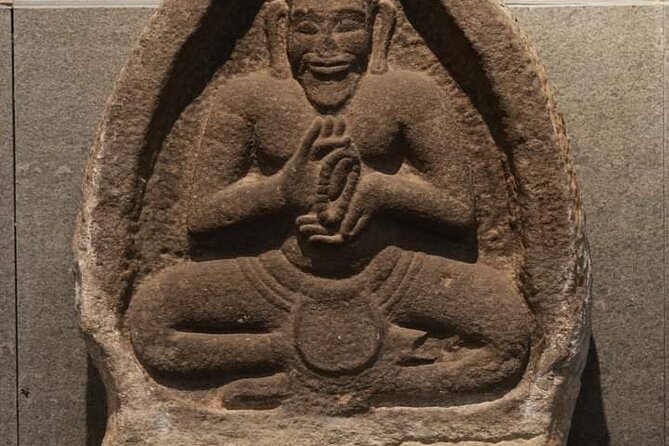
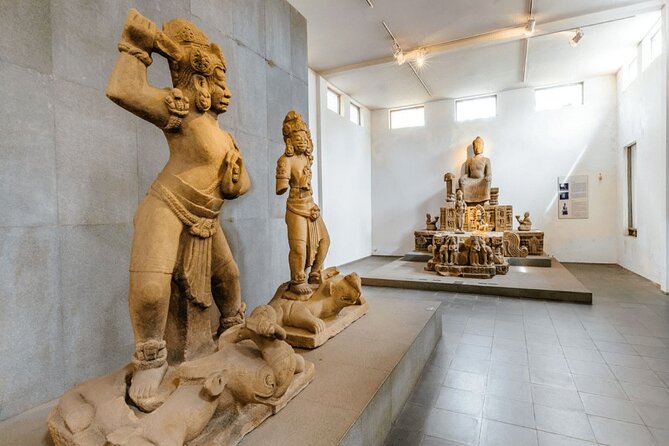
- Da Nang Museum of Cham Sculpture with hundreds of Hindu stone statues from the 7th–14th century Cham Pa Kingdom
- Dragon Bridge and Han River context, including Da Nang’s Vietnam War role before 1975
- An Long Pagoda and local Mahayana Buddhism practice explained through everyday life stories
- Cathedral locals call chicken church, for a true neighborhood landmark feel
- Han Market and French-built market history, plus the Chinese community angle
- Pho plus coconut coffee or salt coffee tasting, paced as part of the walk instead of a random detour
The value equation: $29 for sites, tickets, and food
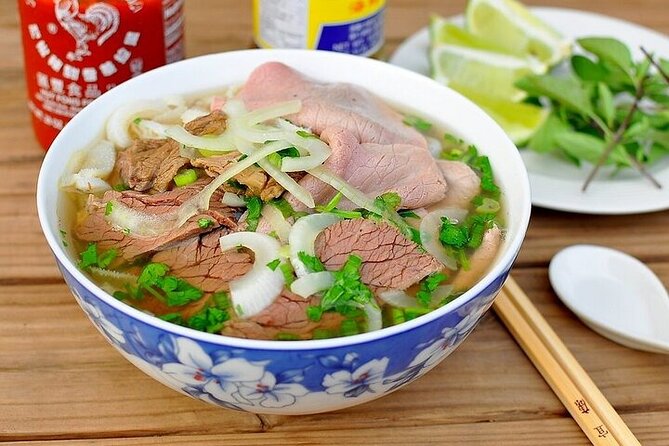
At $29 per person for an about 3-hour private city tour, the math is mostly in your favor if you actually want the included eats and entry ticket. You’re not just paying for narration; you’re getting Cham Museum entrance tickets plus a meal-like stop with chicken or beef pho, and an end-of-tour coffee tasting (coconut coffee or salt coffee depending on what you selected). Add in a historian-style English guide, and it becomes a pretty efficient way to cover a lot of central Da Nang without piecing together separate admissions and street food errands.
Also, it’s priced to work for couples, friends, or small groups, since it’s private and you’re not sharing the “good questions” with a huge crowd. Mobile ticket included is a small detail, but it cuts down friction when you’re on foot.
You can also read our reviews of more historical tours in Da Nang

Where the tour starts: Cham Museum as your smart first move
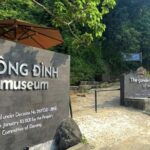
You meet at Da Nang Museum of Cham Sculpture, address Số 02 Đ. 2 Tháng 9, Bình Hiên, Hải Châu, Đà Nẵng 550000, Vietnam. Starting here is a clever choice because the Cham Pa story is the foundation for the rest of the trip. Even if you’ve never heard of Cham Pa, you’ll get a clear “why it matters” through the museum’s big concentration of Hindu sculpture.
And since you also get general Vietnam history context during the walk, the order helps. Instead of jumping from one landmark to another with no thread, the tour builds a narrative—religion and early Southeast Asian power in central Vietnam, then the Buddhist layer, then the modern city shaped by war and colonial-era trade.
Stop 1: Da Nang Museum of Cham Sculpture and the Cham Pa thread
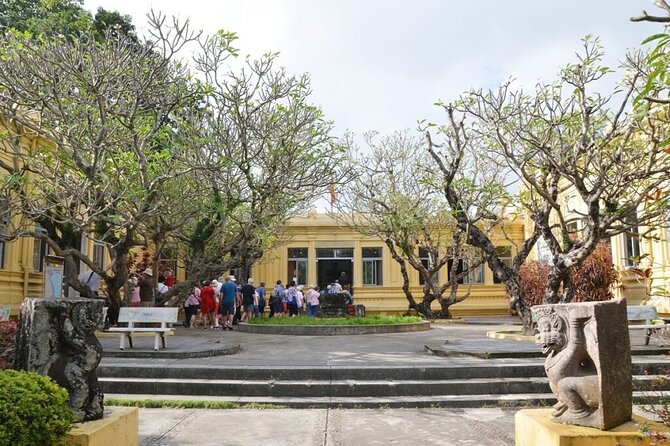
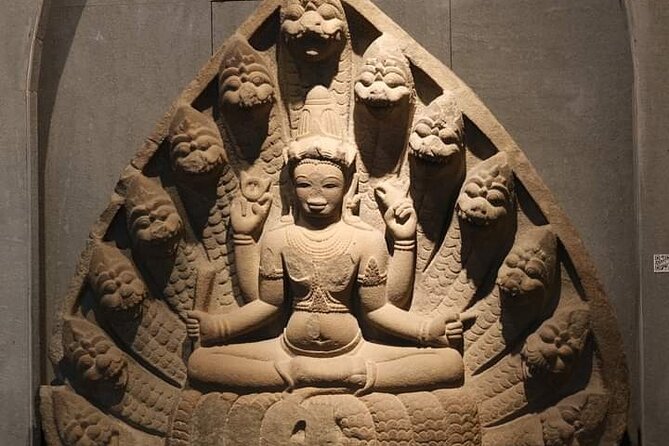
This is the anchor stop: the museum is described as the world’s largest Hinduism sculpture collection, with hundreds of antique stone statues dating from the 7th–14th century of the Cham Pa Kingdom. If you’re the kind of traveler who likes to understand what you’re looking at (not just seeing it), you’ll get more out of this place because your guide brings it into context.
What I like about this start is that it gives you a way to read central Vietnam beyond the obvious: temples, cultural symbols, and the deep timeline of religion in the region. The tour also references My Son relics as part of the Cham Pa heritage story. You’ll hear that My Son is connected to Vietnam history, and the distance context is given as about 60 km from Hoi An—useful if you’ve got Hoi An on your plan.
A possible drawback: museums can slow people down. If your group is easily distracted by photo stops, you’ll want to keep pace so you still have time for the later bridge, cathedral, and market parts.
Stop 2: Long An Temple (An Long Pagoda) and Buddhism in daily life
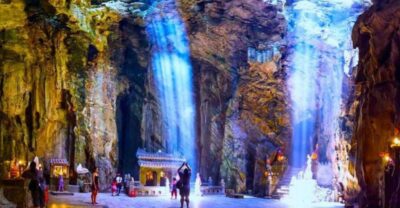
Next comes Long An Temple, also described as An Long Pagoda, where you learn about Mahayana Buddhism and how local beliefs affect day-to-day life. The value here isn’t just architecture. It’s the way the guide ties practice to what you’ll notice as you walk: how religion shows up in routines and local meanings rather than staying locked behind a ticket booth.
This kind of stop also changes the tempo of the day. After stone statues and deep-time history, you shift to beliefs you can still see living in the city. The tour is clear about using interesting stories to explain the background.
If you’re short on patience for anything religious, this can still work because the goal isn’t a lecture—it’s a local-life connection. Still, expect to stand, look, and listen.
Stop 3: APEC Park for a quick reset
You’ll stop at APEC Park between major sights. The tour data doesn’t spell out what you do there, but the practical purpose is obvious: it helps break up the walking and gives you a breather before the big photo-and-waterfront stretch.
In a compact 3-hour format, these minor stops matter. They prevent the day from turning into constant movement without pauses.
You can also read our reviews of more museum experiences in Da Nang

Stop 4: Dragon Bridge and the Han River war-era viewpoint
Then you hit the headliner: Dragon Bridge, described as the most iconic bridge on the world, with a length of 666 m. Even if you’re not a bridge fanatic, the tour frames it in a bigger setting by pairing the bridge with a walk along the Han River.
Here’s the history angle that makes it more than a skyline stop: you witness what the Americans built to serve the Vietnam War, with Da Nang described as the strongest military base before 1975. This is exactly the kind of contextual link that turns a pretty waterfront into something meaningful. It helps you understand why the city looks the way it does, and why certain structures and areas developed when they did.
Practical note: you’re outdoors. If the weather is poor, the experience can be canceled and you’ll be offered another date or a full refund, so keep an eye on skies that day.
Stop 5: Da Nang Cathedral, nicknamed chicken church

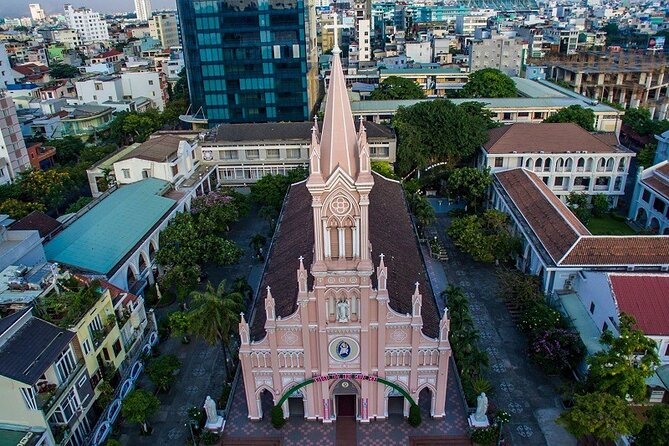
Next is Da Nang Cathedral Church, and locals call it chicken church. I like this stop because it shows how city landmarks pick up nicknames that stick in everyday speech. It’s less about a formal “tourist landmark” vibe and more about local identity.
You’ll be walking through the older layers of the city while your guide keeps the narrative moving. The cathedral is also a useful contrast after the Buddhist and Hindu history stops—different faith traditions, different symbols, same central theme: how foreign influences and local adaptation overlap in Vietnam.
Stop 6: Han Market (French-built) and the Chinese community story
Then you move into Han Market, described as the biggest market in central Vietnam, built by French during the colonial period. The tour doesn’t treat the market like an Instagram backdrop only. It connects it to the story of the Chinese community living in Vietnam.
For me, this is where the tour feels most “real city.” Markets are where daily life keeps happening, even while governments and empires change. If you enjoy watching how people trade, chat, and live, Han Market is the kind of stop that makes the history feel grounded.
One practical consideration: markets can be loud, crowded, and visually busy. If your travel style is “quiet and curated,” you might find it a bit intense. If you like people-watching and culture-as-normal, you’ll probably enjoy it.
The food beats: pho at the Hanoi Quarter corner
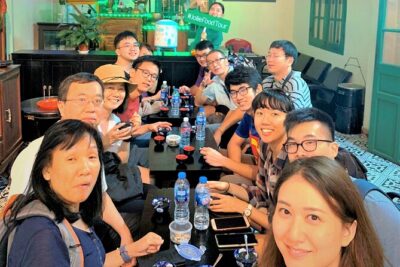
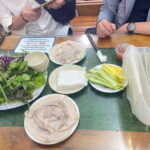
You’ll stop at a quiet street corner to taste some of the best pho at an area called the old Hanoi Quarter inside Da Nang. It’s a smart placement in the tour flow: after temples, bridges, and churches, a warm bowl of pho helps reset your energy without needing to leave the route.
Two included details matter here:
- You get chicken or beef pho as an included option
- You also get Ha Noi herbal green tea at the Ha Noi corner (listed in inclusions)
If you’re sensitive to pacing, this food stop is a good “sit-and-regroup” moment. If you tend to travel hungry, it also reduces the temptation to snack earlier than planned.
Coffee to end the story: coconut coffee or salt coffee
Your tour ends with tasting coconut coffee or salt coffee, described as the best coffee in Vietnam by untold stories tied to Vietnam’s past wars and how those events affected fathers’ generations’ sleep. The tone here is human and personal—less “dates and dates” and more “how history lives in families.”
This ending works well because it’s a final sensory moment: you get to taste something local, and the guide ties that taste to the larger national memory. It also gives you a reason to keep listening after the biggest sights, since coffee is a natural conversation starter.
What you actually get included (and what you don’t)
Here’s the practical breakdown based on the tour inclusions:
- Private certificate English-speaking guide with background historian
- Cham Museum entrance tickets
- Pho (chicken or beef)
- Coffee tasting (coconut or salt coffee, based on selected option)
- Ha Noi herbal green tea
- Optional add-in depending on your selected option: rice wine distillery and tasting
Not included:
- Pick-up/drop-off
- Any eating or drinks beyond what’s listed
- Tips for the guide
Who this Da Nang tour is best for
This tour suits you if:
- You want a compact overview of central Da Nang in about 3 hours
- You like history explained with local examples (religion sites, war context, market stories)
- You enjoy combining sightseeing with real food stops like pho and coffee
- You prefer a private group where you can ask questions without the schedule pressure of a big tour
It may be less ideal if:
- You’re looking for a slow museum day or deep time to spend hours in one place
- You don’t like walking and prefer getting around with a vehicle
- You want strictly “modern city only” sights and nothing tied to religion or war-era history
Timing, tickets, and practical logistics that matter
This is the kind of tour you can plan around because it stays in central Da Nang and returns back to the meeting point at the end. No pick-up/drop-off means you should map your route to the Cham Museum area in advance.
It also says it uses a mobile ticket, and confirmation is received at booking. That helps if you like to keep your phone organized and avoid paper ticket hunts.
The average booking time is listed as about 60 days in advance. If you’re traveling during peak periods, I’d treat that as a clue: the tour may fill up around your dates.
The FAQ you’ll want before you book
FAQ
How long is the Da Nang Epic History Tour?
It’s about 3 hours.
How much does the tour cost?
The price is $29.00 per person.
Is this tour private?
Yes. It’s listed as a private tour/activity, and only your group participates.
Where does the tour start and where does it end?
It starts at Da Nang Museum of Cham Sculpture (Số 02 Đ. 2 Tháng 9, Bình Hiên, Hải Châu, Đà Nẵng 550000, Vietnam) and ends back at the meeting point.
What is included in the price?
Included are a private English-speaking guide with background historian, Cham Museum entrance tickets, chicken or beef pho, coconut coffee or salt coffee (depending on what you select), Ha Noi herbal green tea at Ha Noi corner, and optional rice wine distillery & tasting if you select that option.
Do I get pick-up or drop-off?
No. Pick-up and drop-off are not included.
What places are visited during the tour?
You’ll visit Da Nang Museum of Cham Sculpture, Long An Temple (An Long Pagoda), APEC Park, Dragon Bridge, Da Nang Cathedral Church (chicken church), and Han Market. The tour also includes a pho stop at the old Hanoi Quarter area and the coffee tasting ending.
What happens if weather is poor?
This experience requires good weather. If it’s canceled due to poor weather, you’ll be offered a different date or a full refund.
What is the cancellation policy?
You can cancel up to 24 hours in advance for a full refund. Cancellation cut-off is based on local time.
Should you book the Da Nang Epic History Tour?
If your ideal Da Nang day is a thoughtful walk through major landmarks—plus pho and coffee that are part of the story—then yes, I think this is a strong pick for the money. The best part is how it connects places you’d otherwise treat as separate stops: Cham Pa sculpture in the museum, living Buddhism at An Long Pagoda, war-era context along the Han River, and the market-and-community layer at Han Market.
If you hate walking or you want a slower pace with fewer stops, you might find the 3-hour format rushed. But for most first-timers who want the city’s core in one go, this tour delivers a lot of meaning without getting too complicated.