REVIEW · DA NANG
Danang On the Waterfront Photo Tour
Book on Viator →Operated by Vietnam in Focus - Day Tours · Bookable on Viator
Dawn at Da Nang feels like insider access. This hands-on photo tour puts you at the docks, harbour, and city skyline when the light is soft and the work is real. I like the early hotel pickup at 5:30am and the chance to review your photos with the guide after you shoot.
The only tradeoff is the very early start and that food and drinks aren’t included, so plan for water and a simple snack. If weather is poor, the tour can be adjusted since it’s meant for good shooting conditions.
In This Review
- Key things to know before you go
- Why Da Nang’s waterfront is a photography classroom at dawn
- Price and value: what $122.06 buys you (and what you supply)
- The 5:30am start: how the timing shapes your photos
- Stop 1 on the city beach: coracle boats, markets, and first frames
- Stop 2 at the harbour: waking streets, coffee, and shot feedback
- Stop 3 at The Doc’s: ice loading and the art of relationship composition
- The skyline moment: framing Da Nang beyond the action
- Guided photo review: how you leave with real improvement
- What to expect from the guide style
- Practical advice: camera setup, footwear, and staying comfortable
- Who this tour is best for (and who should skip it)
- Should you book Danang on the Waterfront photo tour?
- FAQ
- How long is the Danang on the Waterfront photo tour?
- What time does the tour start?
- Where does the tour take place in Da Nang?
- Is hotel pickup included?
- Is food or drinks included?
- Do I get a chance to review my photos?
- Is this tour private?
- What kind of photography skills does the tour focus on?
- Is the tour physically demanding?
- What happens if weather is poor?
Key things to know before you go
- 5:30am hotel pickup: start early enough to catch fishermen returning and markets already moving.
- Docks + coracle boats + sorting the catch: perfect for learning documentary storytelling.
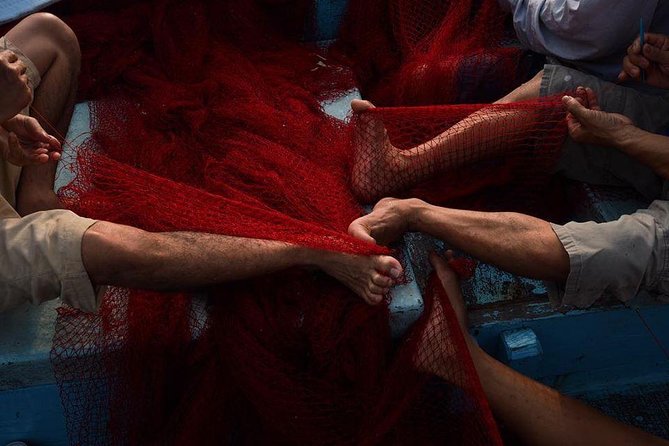
- Da Nang harbour work scenes at The Doc’s: ice loading and crew activity give you human-focused composition practice.
- Coffee stop plus instant feedback: you reset your approach while the morning light is still changing.
- Photo review time with your guide: you leave with clearer edits and next steps, not just a memory.
- Da Nang skyline included: you’ll also learn how to frame the city view beyond the action.
Why Da Nang’s waterfront is a photography classroom at dawn
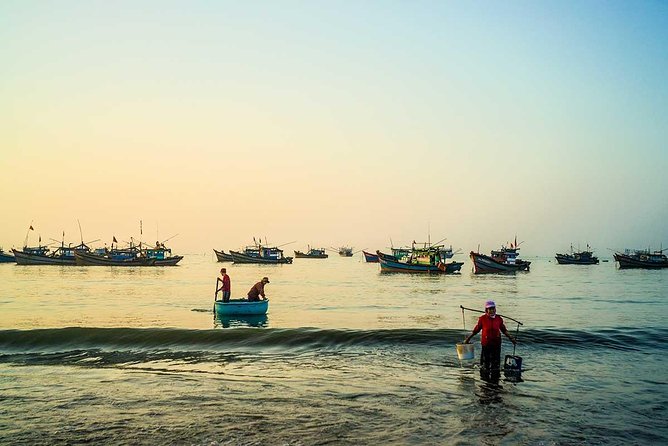
Da Nang’s waterfront isn’t staged for tourists. It runs on schedules you can feel in your bones, from overnight returns to morning sorting. That’s why this kind of dawn session is so useful: you learn to work with real movement and real people, not posed moments.
The tour is built around documentary photography fundamentals, with special attention to the shifting early-morning light. You also practice fast, practical shooting because the waterfront keeps changing every few minutes. And you’re not just left on your own—you get coaching and time to look at your photos afterward.
You can also read our reviews of more photography tours in Da Nang

Price and value: what $122.06 buys you (and what you supply)
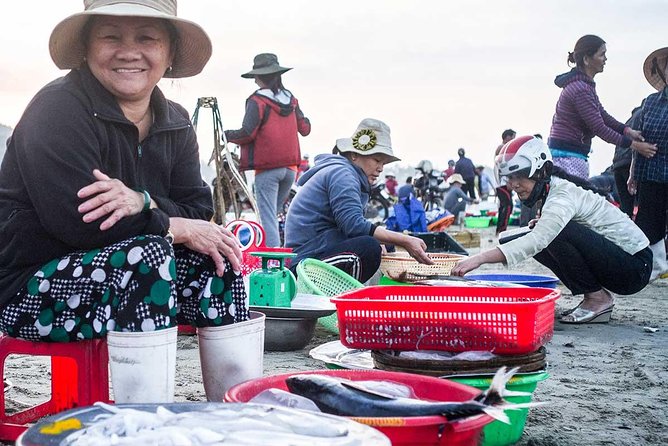
At about $122.06 per person for roughly 4 hours, you’re paying for three things that matter in photography: access, guidance, and feedback. You get hotel pickup and drop-off, plus a professional photographer guide, which is the biggest part of the value.
You’ll also benefit from group discounts if you’re traveling with others, and the tour uses a mobile ticket. The stops are also set up so you don’t waste time figuring out entry issues; the itinerary’s admission tickets are listed as free.
What you’ll need to bring: your own patience for an early morning, and your own food and drinks plan. The tour includes coffee during the walk to the harbour, but there’s no full meal provided. If you hate mornings, this isn’t the one to test that theory.
The 5:30am start: how the timing shapes your photos
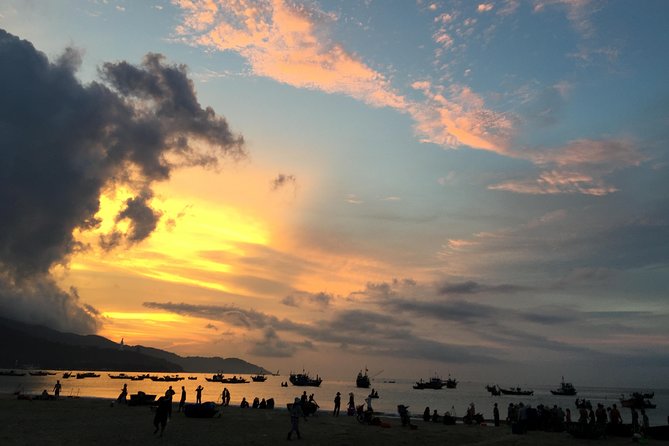
The meeting time is 5:30am, with hotel pickup to make that hour less painful. That’s not random. It’s the difference between generic photos and scenes with real work: fishermen bringing in overnight catch, traders sorting on the beach, and harbour workers loading and moving quickly.
You’ll spend your best light window learning how to compose in changing conditions. Early morning light is softer, but it also shifts fast. The guide’s job is to help you keep your vision steady even when the scene isn’t.
If you tend to rush when you’re cold or tired, prepare for that. I recommend you show up early, dress for early-morning chill, and treat the first 20 minutes as your warm-up period.
Stop 1 on the city beach: coracle boats, markets, and first frames
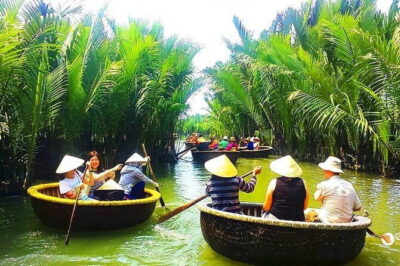
Your morning begins at Da Nang City Beach, where overnight activity is just finishing and morning activity is already underway. One of the most interesting details here is the rhythm of the tide and the way fishermen row tiny coracle boats across it. That’s motion you can build a story around.
You’ll also see a market scene starting up on the sand area: traders sorting and selling the haul. This is where documentary photography becomes practical. Instead of thinking only about what’s pretty, you start thinking about sequence—arrival, sorting, selling, and the people in between.
What can be tricky: the beach is a wide scene. Wide scenes are great for context, but they can tempt you to shoot everything. Let the guide help you pick moments with clear relationships—fisher to boat, trader to fish, light on hands, and the small gestures that make the scene feel lived-in.
Stop 2 at the harbour: waking streets, coffee, and shot feedback
Next you head toward the Da Nang Harbour through waking streets. This part matters because it teaches you to keep photographing while the setting changes, not just when you reach a postcard location.
There’s a quick coffee stop on the way, which also doubles as a reset. You get a chance to review what you learned so far and get feedback on shots you’ve taken. That’s a smart structure: you correct your approach before the harbour gets busier and the light changes again.
A possible drawback here is attention fatigue. At this point it’s still very early, and you’ll likely want to check your camera settings or just mentally coast. Use the coffee stop as your checkpoint—ask the guide for one concrete adjustment you can try immediately afterward.


Stop 3 at The Doc’s: ice loading and the art of relationship composition
The third stop is where the harbour’s work becomes vivid at close range: The Doc’s. You’ll enter the harbour area where workers shuffle, load, and manage materials like ice for the boats. This is not just background texture. It’s the scene—work in progress.
The guide focuses on how to create a story around people’s work. You’ll practice composition techniques that emphasize relationship—how people, tools, and actions relate inside the frame. Think about how the shot explains itself: who’s doing what, what’s moving, and what the viewer understands without a caption.
You also learn by doing. Because the harbour is active, you’ll keep photographing fast-moving moments and adjust your framing on the fly. It’s the kind of practice that helps you later, when you’re on your own in a market, a train station, or any working scene.
If weather is wet or the light turns dull, this stop can still work. One key lesson from the guide’s approach is that you don’t wait for perfect skies—you learn to shoot with the light you get. That matters in real travel, where you rarely control the weather.
The skyline moment: framing Da Nang beyond the action
Part of the tour’s appeal is that it doesn’t treat the waterfront as only docks and boats. You also photograph scenes across the Da Nang skyline.
This is a useful skill-building move. When you’re capturing documentaries, it helps to show place as well as people. Skyline frames give context: you’re telling viewers where this work happens, and how the city sits alongside the sea.
A simple way to make this portion work is to use the wider view for setup shots and then return to human detail afterward. If you skip this, you may end up with only tight action frames and fewer “anchor” images that show the bigger picture.
Guided photo review: how you leave with real improvement
One of the best features is the guided time to review your photos. This is where the tour turns from sightseeing into skill building.
You’ll get help evaluating composition and storytelling, and you’ll see your images in the same flow the guide saw them: light, motion, and relationships inside the frame. That feedback loop is important because your brain can trick you when you’re shooting fast. The camera might capture the moment, but it doesn’t always capture the story you intended.
If you’re aiming to improve quickly, photo review is your shortcut. Even a small adjustment—moving your subject, tightening your crop, or changing your timing—can transform your results. And because you review soon after shooting, you remember what was happening in front of you, which makes the lesson stick.
What to expect from the guide style
The tour is led by a professional photographer guide, and some past experiences mention guides such as Thomas and Cristian Sorega. What’s consistent in the feedback is that the coaching goes beyond basic pointing-and-shooting. It includes guidance for different lighting situations, and it can cover creative angles like black and white and low light approaches.
That said, guides can differ in emphasis. Some may push story and composition harder, others may focus more on technical choices for the light. Either way, the format still gives you the same core benefits: practical instruction while you’re shooting, feedback at set points, and a review at the end.
Practical advice: camera setup, footwear, and staying comfortable
Because this tour is centered on the waterfront, conditions can change fast. You’re shooting at a beach and harbour early in the day, so bring gear that can handle a little damp and changing footing.
Footwear matters more than you think. You’ll likely move on uneven surfaces near docks and shoreline areas. Wear shoes that let you stay stable and confident.
For your camera, keep things simple and reliable. If you constantly switch between complicated modes, you’ll lose the chance to practice what the guide teaches. Try to make one or two core choices and then focus on composition and timing.
Finally, treat the timing like part of the lesson. This isn’t just a place. It’s a window of light and activity. If you’re mentally “late,” you’ll miss the moment when fishermen are bringing in catch and the market is starting up.
Who this tour is best for (and who should skip it)
This tour is a strong fit if you want real documentary practice in a place where people are actively working. It’s also great if you like structured coaching—learning in the moment, then applying it before the light shifts again.
You’ll probably enjoy it most if you:
- like photography learning through real scenes and real people
- want a guided photo review, not just a guided walk
- don’t mind a super-early start for better light and less crowding
You might consider another option if:
- you refuse early mornings and aren’t willing to dress for chill
- you need a full breakfast or long food breaks (since food and drinks aren’t included beyond coffee)
- you want only landscape-style city views without people/work scenes
The tour calls for moderate physical fitness, mostly because waterfront walking can involve uneven ground and steady movement.
Should you book Danang on the Waterfront photo tour?
I’d book it if you want a photography lesson that actually uses the environment instead of ignoring it. The combination of docks + harbour work at The Doc’s + skyline context, plus photo review, makes it a value-focused way to improve quickly in a short time.
Skip it if you’re looking for a laid-back morning with minimal walking or you’re traveling with no tolerance for a 5:30am start. Also, plan your food and drinks ahead of time so the tour stays enjoyable.
If you show up ready to learn and you’re willing to work with the light you get, this is the kind of experience that can raise your photography skills fast—and give you images that feel like Da Nang working, not just Da Nang posing.
FAQ
How long is the Danang on the Waterfront photo tour?
The tour lasts about 4 hours.
What time does the tour start?
It starts at 5:30am.
Where does the tour take place in Da Nang?
You’ll photograph Da Nang City Beach, then head to Da Nang Harbour, including The Doc’s area.
Is hotel pickup included?
Yes. Hotel pickup and drop-off are included.
Is food or drinks included?
No. Food and drinks are not included.
Do I get a chance to review my photos?
Yes. The tour includes time to review your photos with the guide after you’ve been shooting.
Is this tour private?
Yes. It’s listed as private, meaning only your group participates.
What kind of photography skills does the tour focus on?
The tour focuses on documentary photography, including composition and capturing scenes in changing early morning light, plus fast-moving activity at the waterfront.
Is the tour physically demanding?
It notes a moderate physical fitness level.
What happens if weather is poor?
The experience is weather-dependent. If it’s canceled due to poor weather, you’ll be offered a different date or a full refund.