REVIEW · DA NANG
Lady Buddha statue- Marble Mountains- Coconut Jungle- Hoi An City
Book on Viator →Operated by Andy hoi an online Tours · Bookable on Viator
Golden views in a packed day.
This Da Nang-to-Hoi An day tour strings together the biggest wow-stops with real local flavor, starting at the Lady Buddha at Linh Ung Pagoda on Son Tra Peninsula. I like that it’s organized around meaningful places, not random stops: you get the ocean-and-city views first, then you’ll move on to the dramatic Marble Mountains with pagodas and caves, followed by Hoi An’s classic streets and lantern time. One thing to keep in mind is it’s a long, active day, so come ready for sightseeing on your feet and some uneven terrain around the mountains and Old Town.
My favorite part is the pacing: you’re not stuck at one place. Instead, you swap viewpoints for experiences—then end with Hoi An’s night market atmosphere. The bamboo basket boat in the coconut forest is also a standout, because it’s fun and different from the usual temple-and-photo routine. If you’re sensitive to heat or you dislike tight walking segments, plan your energy accordingly.
In This Review
- Key things that make this tour worth your time
- How a 9:00 AM Da Nang to Hoi An day fits together
- Lady Buddha at Linh Ung Pagoda: the tallest photo with real sea views
- Dragon Bridge and the 666-metre icon of modern Da Nang
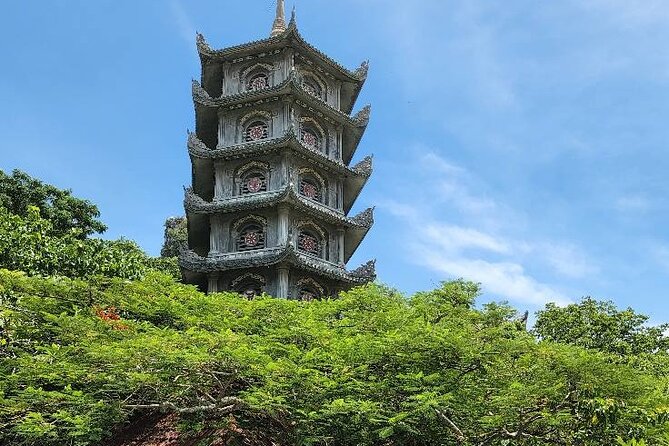
- Marble Mountains: pagodas, caves, and a wartime past you can still feel
- Bay Mau coconut forest: the bamboo basket boat experience in nipa palms
- Hoi An Ancient Town walking with lantern atmosphere and a short boat ride
- Japanese Covered Bridge, Tan Ky House, and the assembly halls that explain Hoi An
- Price and value: what $140 includes and why it adds up
- Who should book this tour (and who might prefer a lighter day)
- Should you book this tour?
- FAQ
- FAQ
- What time does the tour start?
- Where does pickup happen?
- How long is the tour?
- What is included in the price?
- Is this a private tour?
- Does the tour require physical activity?
- What places are included in Hoi An?
- What happens if the weather is bad?
Key things that make this tour worth your time
- Lady Buddha views from Linh Ung Pagoda, with mountains, ocean, and Da Nang city in one sweep
- Marble Mountains caves, including wartime use as a hospital and shelter during the conflict in Vietnam
- Bay Mau coconut forest bamboo basket boat, with a chance to fish for crabs
- Hoi An Old Town guided highlights, including the Japanese Bridge, Chinese Assembly Hall, and heritage houses
- A 20-minute boat ride in Hoi An City, plus night market and lantern time
- Historic Hoi An landmarks like Tan Ky House and the Japanese Covered Bridge (built in 1616)
How a 9:00 AM Da Nang to Hoi An day fits together
You start at 9:00 AM with pickup from your hotel in Hoi An or Da Nang City. That matters, because it cuts out the stress of figuring out transport across two cities—especially when your schedule is already full. You’ll be in private transportation the whole time, and the tour runs about 10 hours, long enough to cover a lot, but not so long that you’re stuck staring at a bus window.
The tour is also built for momentum. You’ll move from one zone to the next—Son Tra Peninsula to the city center area, then to Marble Mountains, then west toward the coconut forest, and finally back to Hoi An for Old Town and night market moments. It’s the kind of day where you’ll want to travel light: bring water, keep your camera charged, and save shopping for when the night market opens up.
Finally, note the physical side. The tour asks for moderate physical fitness, which is fair given the walking in Hoi An and the mountain stops. There’s an elevator for getting up to the Water Mountains, but you’ll still be moving around.
You can also read our reviews of more city tours in Da Nang



Lady Buddha at Linh Ung Pagoda: the tallest photo with real sea views
Your day opens at the Giant Lady Buddha statue at Linh Ung Pagoda on Son Tra Peninsula. The best part here isn’t just the statue itself—it’s the view setup. You look out over mountains, the ocean, and the modern city of Da Nang, and that combination helps you understand where everything sits geographically.
The stop is about 40 minutes, which is usually enough time to take photos without feeling rushed. I also like that this isn’t a quick drive-by. You get time to slow down, orient yourself, and notice how the coastline and city layout work together.
Practical tip: this is the kind of place where you’ll want comfortable shoes and a bit of patience if there’s a line. The mood is peaceful, but you’re sharing it with plenty of other people chasing the same view.
Dragon Bridge and the 666-metre icon of modern Da Nang
After you’ve gotten your big scenic start, the tour jumps to the Dragon Bridge—a symbol of modern Da Nang. The highlight detail is the bridge length: 666 metres long. That’s the sort of number you remember because it’s unusual, and the scale makes it easier to picture how important this bridge is for the city.
You also get a short window—about 15 minutes—to take in the surroundings. That’s not long, but it’s enough for seeing the bridge itself, getting a few good angles, and spotting the Love Bridge of Lovers nearby.
This stop works well because it contrasts with the temple-and-caves vibe. You’re switching gears from spiritual geography to city identity. If you like your days with variety—temples, nature, then city icons—this pairing makes sense.
Marble Mountains: pagodas, caves, and a wartime past you can still feel
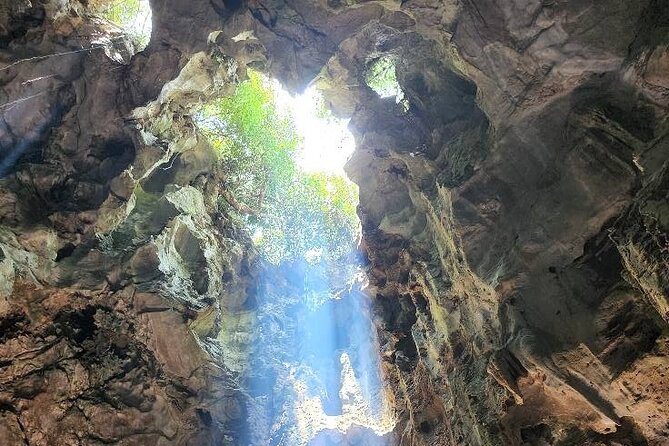
Next comes the Marble Mountains, reached with an elevator up to the Water Mountains. The tour gives you about 1 hour 30 minutes, which I think is a good amount of time for this type of site. You’re not only looking at views; you’re also exploring pagodas and caves.
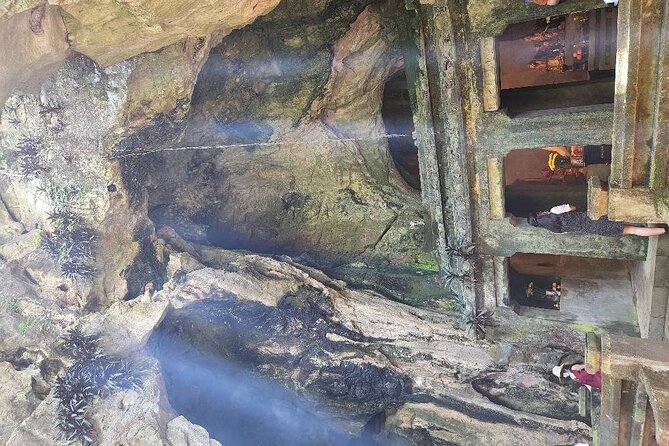
Here’s the detail that adds weight to the visit: some caves were used as a hospital to treat Vietnamese wounded soldiers and as shelter for Viet Cong during the American war. Even if you don’t go deep into every story, the fact that these spaces had human purpose beyond sightseeing changes how you experience the place.
You’ll also enjoy summit viewpoints—those are part of why Marble Mountains remain popular. From higher ground, you get a clearer look at the coastal region and the way the mountains break up the coastline and road access.
One consideration: caves and mountain paths can mean uneven ground. If you have mobility issues, the “moderate fitness” note is your signal to take it slowly and use any handholds you see.
Bay Mau coconut forest: the bamboo basket boat experience in nipa palms
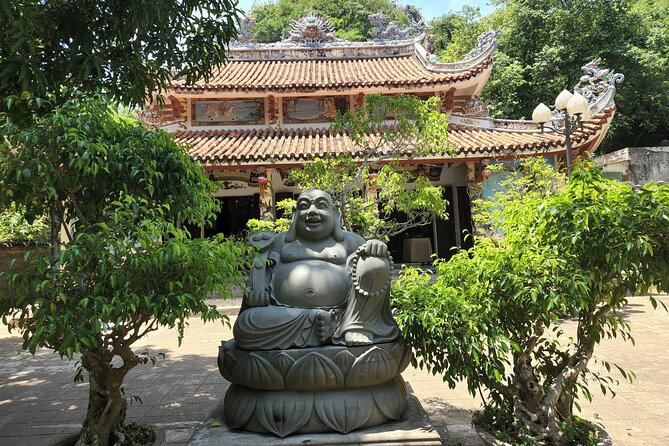
Then you shift from stone to water and greenery at Bay Mau Coconut Forest. The focus here is Nipa Palm and the bamboo basket boat ride. The tour aims for about 1 hour, which gives you time to enjoy the scenery and do the activity without feeling like it’s over before it starts.
This is one of those experiences where the fun comes from the format. You’re in a basket boat, you’re floating through the coconut forest area, and you even get a chance to fish for crabs. That makes it hands-on, not just scenic.
A small but useful mindset: treat it like an activity, not a performance. You’ll enjoy it more if you relax and go along with the rhythm of the ride. Also, keep an eye on where you place your things—things can get damp around water experiences.
If you like tours that mix culture with play, this stop is exactly that balance.






Hoi An Ancient Town walking with lantern atmosphere and a short boat ride
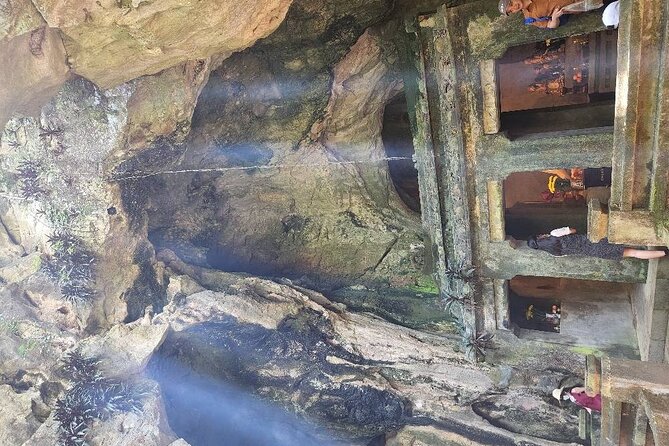
By the time you reach Hoi An Ancient Town, the pace changes again. You get a guided walking tour covering several key sights: the Japanese Bridge, a traditional house style look, a Chinese Assembly Hall, and a cultural and historical museum. The idea is to help you connect what you see to why the architecture and community influences are different here.
You’ll also spend time exploring back alleys, not just the main streets. That’s where you get a better feel for Hoi An’s character—small-scale lanes, old signage, and everyday life mixed with tourism.
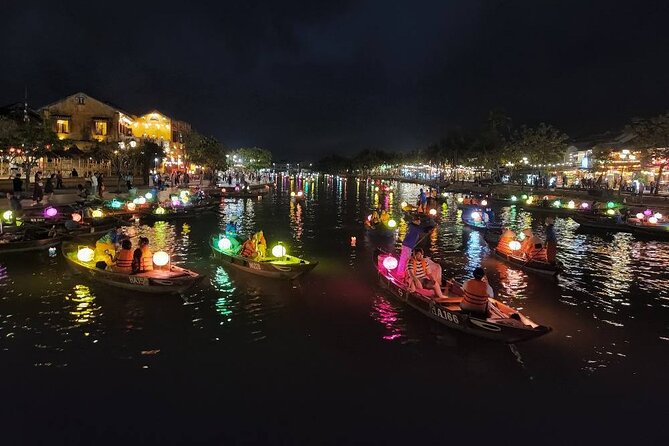
There’s also a 20-minute boat ride in Hoi An City. Even though it’s short, it helps you view the town from a different angle and gives your legs a break between walking stretches.
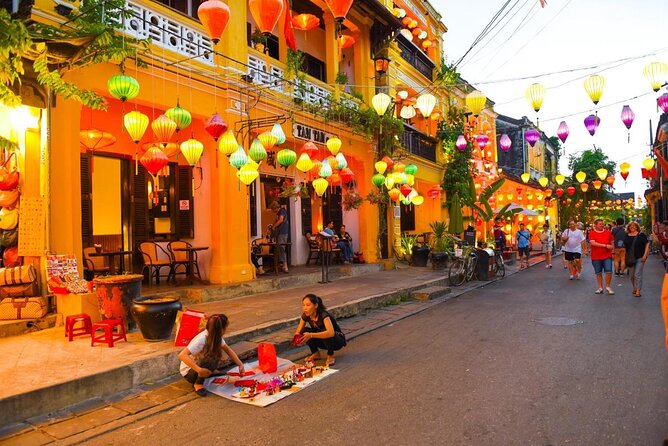
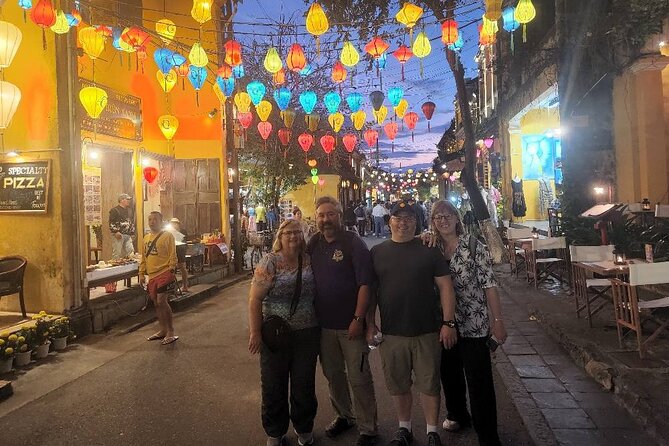
Then comes the mood shift into night: the tour includes the night market period, with lanterns front and center. You’ll have time to browse and snack or pick up small gifts. If you want dinner, you can do it on your own around the market area.
Practical advice: in the Old Town and market areas, keep your expectations realistic. You’ll be walking among crowds. Wear shoes you trust and don’t plan to do heavy shopping while also trying to photograph every lantern.
Japanese Covered Bridge, Tan Ky House, and the assembly halls that explain Hoi An
After the Old Town walking highlights, you visit specific landmark stops that sharpen your understanding of the city’s older layers.
First is the Japanese Covered Bridge, a symbol of Hoi An, built in 1616 by the Japanese community living in Hoi An. It’s been restored multiple times, and that restoration story is part of what makes the bridge feel like a living piece of history rather than a frozen artifact. The stop is brief—about 15 minutes—but it’s a classic must-see.
Next you’ll have time at the Museum of Folklore, which used to be a merchant house. Now it’s presented as a fishing and farming museum, offering a window into how people lived and worked in Hoi An. This is the kind of stop that works best if you’re the type who likes understanding daily life, not only big monuments.
Then comes the Old House of Tan Ky. This is an ancient merchant house where many generations lived and traded, and it’s described as a mix of Vietnamese, Chinese, and Japanese styles. That combination is the point: Hoi An wasn’t shaped by one group alone. It evolved through trade, community, and shared spaces.
The tour also includes the Fukian Assembly Hall (Phuc Kien), another Chinese assembly hall. These halls matter because they connect architecture with community organization—how groups supported members, handled cultural identity, and maintained social ties.
If you’re wondering whether these stops are worth the time, here’s the way I’d frame it: the more you look at these buildings in sequence, the more you’ll see patterns, rather than treating each one like a separate photo opportunity.
Price and value: what $140 includes and why it adds up
The price is $140.00 per person for a tour that runs about 10 hours. At first glance, it can sound like a lot—until you break down what you’re getting.
You’ll have private transportation, an English-speaking tour guide, lunch, and bottled water. On top of that, entrance tickets are included for the attractions, plus the bamboo basket boat ride fee. In other words, the day isn’t built on optional add-ons. It’s set up so you can show up and go from stop to stop without constantly making decisions.
That’s the value: fewer headaches, fewer surprises, and more time spent seeing instead of negotiating transport. It’s also a big day that covers both Da Nang and Hoi An, which usually means more moving parts if you do it independently.
What you should budget for: the tour notes that drinks and personal expenses are not included. So if you like iced drinks during the day, plan for that. Also, if you want souvenirs at the night market, bring extra cash or plan your payment method.
Who should book this tour (and who might prefer a lighter day)
This tour is a strong fit if you want a single day that hits the big names: Lady Buddha, Dragon Bridge, Marble Mountains, coconut forest boating, and Hoi An’s iconic Old Town scenes. It’s also ideal if you prefer a guide to connect the dots—especially around the mixed influences you’ll see in Hoi An’s architecture.
It’s less ideal if:
- you want a slow, flexible day with long downtime between stops
- you dislike walking around temples, caves, and Old Town alleyways
- you have limited tolerance for heat and crowds (Hoi An night market time can get busy)
One final thought: the tour requires good weather. If rain rolls in, the experience may be adjusted or offered on a different date, so check conditions the day before and be ready to shift your plans.
Should you book this tour?
If you’re short on time in the area but still want the full Da Nang-to-Hoi An highlight mix, I’d book it. The value is in the structure: entrance tickets, lunch, private ride, and the coconut basket boat are all handled. You’ll also get that helpful contrast between spiritual sites, modern city icons, nature experiences, and Hoi An’s old-town atmosphere with lantern time.
Skip it only if you’re chasing solitude or you don’t like being on the move for about 10 hours. Otherwise, this is the kind of day trip that gives you plenty to remember—and plenty of variety to justify the cost.
FAQ
FAQ
What time does the tour start?
The tour starts at 9:00 AM.
Where does pickup happen?
Pickup is offered from your hotel in Hoi An or Da Nang City.
How long is the tour?
The duration is about 10 hours.
What is included in the price?
Private transportation, lunch, an English-speaking tour guide, all entrance tickets, the bamboo basket boat ride fee, bottled water, and you’ll receive a mobile ticket.
Is this a private tour?
Yes. It’s a private tour/activity, and only your group participates.
Does the tour require physical activity?
It asks for a moderate physical fitness level, since the day includes walking and mountain/cave areas.
What places are included in Hoi An?
Hoi An Ancient Town is included with a guided walking tour, plus the night market. You’ll also visit the Japanese Covered Bridge, the Museum of Folklore, the Old House of Tan Ky, and the Fukian Assembly Hall (Phuc Kien).
What happens if the weather is bad?
The experience requires good weather. If it’s canceled due to poor weather, you’ll be offered a different date or a full refund.